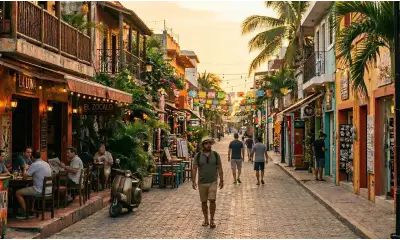
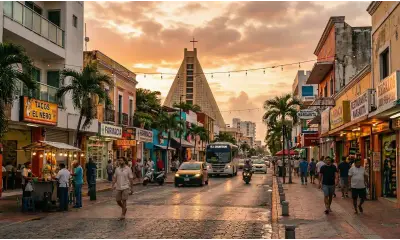
Tulum is a coastal town in Quintana Roo state, 80 kilometers south of Cancun. It functions as three distinct zones: the archaeological site and jungle inland, the beach town proper, and the hotel zone along the Caribbean. The population is roughly 45,000 but swells seasonally with tourists and remote workers. Daily life centers on walking or cycling through the town center, eating at local taquerias and international restaurants, swimming in cenotes, and dealing with high humidity and afternoon rain during summer months. The main language is Spanish, though English is common in tourist areas.
💡 Local Insights
Tulum · 2026
Tulum's cost structure reflects its dual nature as a tourist destination and expat hub. Housing dominates the budget at $1,022/month and varies sharply by location. The beach zone costs significantly more than the town center or jungle areas. Many expats rent furnished apartments in residential neighborhoods like Aldea Zama or Felipe Carrillo Puerto, where you can find studios or one-bedrooms in that range. Groceries at $283/month assume buying at local markets and Mexican chains like Soriana rather than imported goods, which cost 40-60% more. Fresh produce is cheapest at the farmers market near the main square. Street tacos cost $0.50-$1.50 each. Restaurant meals range from $8-$15 for casual Mexican food to $20-$40 at tourist-oriented places. Transportation is inexpensive: ADO buses to Cancun cost $4-$7, colectivos within town are $0.60, and many residents rent scooters for $20-$30/month. Expats generally pay slightly more for housing than locals due to short-term rental markets and lack of long-term lease history, but food costs remain roughly equal.
Frequently Asked Questions
How much does it cost to live in Tulum per month?
A moderate lifestyle costs $1,900/month. This breaks down to approximately $1,022 for housing (rental apartment), $283 for groceries, $200-$300 for utilities and internet, $100-$150 for local transportation, and the remainder for dining out, entertainment, and miscellaneous expenses. The budget tier ($1,140/month) requires cutting housing to $600-$700 and cooking almost all meals. The comfortable tier ($2,945/month) allows for newer accommodations, regular restaurant meals, and more discretionary spending on activities and travel.
What is the average rent in Tulum?
Average rent is around $1,022/month. In the town center and residential neighborhoods like Aldea Zama or Felipe Carrillo Puerto, furnished one-bedroom apartments rent for $900-$1,200/month. Beachfront or hotel zone properties run $1,500-$3,000+/month. Unfurnished rentals are sometimes $100-$200 cheaper but are harder to find as a short-term renter. Most expats sign leases for six months to a year. Landlords often ask for first month, last month, and a deposit upfront. Prices have climbed steadily as remote work has increased demand.
Is Tulum cheap to live in for expats?
Tulum is moderate, not cheap. Monthly costs of $1,900 for a modest lifestyle compare favorably to US or European cities but have risen significantly in the past five years due to tourism and remote worker migration. It is more expensive than smaller Mexican towns or beach destinations farther south. However, it remains cheaper than Cancun or Playa del Carmen for similar quality housing. Expats often find value in the quality of life, access to cenotes, and low cost of services like haircuts or massages rather than absolute affordability.
How much does food cost per month in Tulum?
Groceries cost around $283/month buying local and avoiding imported brands. A kilogram of chicken runs $4-$6, fresh tortillas $0.60/dozen, eggs $2/dozen, and vegetables vary seasonally from $0.50-$2 per item at the farmers market. A week of groceries for one person costs $60-$75. Eating out is affordable: a street taco meal is $1-$3, casual restaurant meals $10-$15, and tourist restaurants $20-$40. Many residents split time between cooking at home and eating local, which keeps food costs reasonable compared to relying on restaurants.
What salary do you need to live comfortably in Tulum?
A comfortable lifestyle costs $2,945/month. This supports better housing ($1,400-$1,700/month for a newer apartment or more space), regular restaurant meals and entertainment, routine travel within Mexico, and a margin for unexpected expenses. For remote workers, income should be at least $3,000-$3,500/month to maintain this standard and build savings. Freelancers should budget conservatively given variable income. Most expats report comfortable living requires a higher baseline than the moderate figure because housing quality in desirable neighborhoods and lifestyle expectations tend to creep upward.
How does the cost of living in Tulum compare to other places?
Tulum sits in the middle range for Mexico and Latin America. A moderate lifestyle here costs $1,900 per month, with housing at $1,022 per month. That makes it slightly pricier than Monterrey, where a comparable lifestyle runs $1,750 monthly and housing $906 monthly. If you want to spend less, Mérida offers a moderate lifestyle for $1,300 per month with housing at $582 per month. On the other hand, Tulum is substantially cheaper than European cities like Milan, which runs $2,700 per month for the same lifestyle, with housing alone at $1,442 per month. Your money stretches further in Tulum than in major European centers, but you'll pay more than in other Mexican cities with similar amenities and infrastructure.
Yes, but with significant constraints. This budget tier requires housing at $600-$700/month (a small, unfurnished apartment or shared housing outside the tourist zone), groceries at $200 or less (buying cheaply, cooking all meals), and minimal discretionary spending. Utilities and transportation would use $150-$200. Eating out would be rare. This lifestyle is feasible for retirees receiving pensions or remote workers with low expenses, but requires discipline and willingness to live away from central Tulum. Most people at this income level choose smaller Mexican towns instead.