Cost of living in Argentina (2026)
 By Jo Berks, Global Cost of Living Research & Data Analyst Published June 2026
 What it really costs to live in Argentina in 2026, for a single person, broken down by category, city and lifestyle. Every figure is dated 2026 and drawn from the World Bank ICP price benchmark, INDEC, the IMF and Trading Economics. Prices are quoted in US dollars, the currency most movers plan in, with peso context at the prevailing rate.
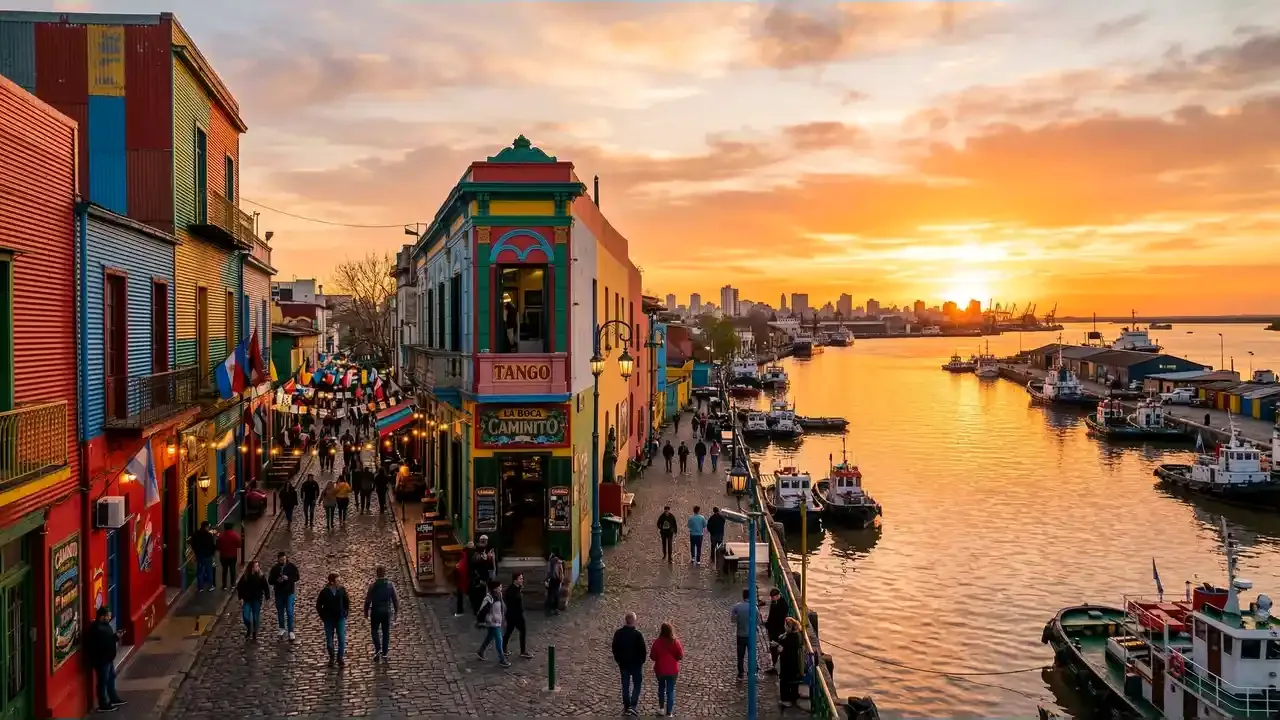
Buenos Aires accounts for the highest cost of living in Argentina, at around $2,025 per month for a single person.
Moderate lifestyle, $20,100 per year. A one-bed rental, food, transport and bills. Derived from the World Bank ICP price benchmark, 2026.
- A single person needs about $1,675 a month ($20,100 a year) for a moderate lifestyle in Argentina in 2026.
- A leaner budget covers the basics from roughly $1,005 a month; a comfortable lifestyle runs about $2,595 a month.
- Buenos Aires is the most expensive place to live, at around $2,025 a month, about 21% above the national figure.
- Rent on a one-bed runs from about $300 a month in interior cities to $1,500 in prime Buenos Aires neighbourhoods.
- Argentina costs roughly 52% less than the United States for a single person ($1,675 against $3,525 a month).
- Annual inflation fell to 32.4% by April 2026, down from triple digits, after currency controls were lifted in 2025.
What it costs to live in Argentina
For a single person renting their own one-bed apartment in a mid-tier neighbourhood, living a moderate lifestyle, the cost of living in Argentina is about $1,675 per month, or $20,100 a year, in 2026. That covers rent, food, local transport, utilities, healthcare and a reasonable amount of discretionary spending.
What you actually spend depends on how you live. The table below sets out four lifestyle tiers, from a lean budget to a high-discretionary one. Most movers and remote workers land somewhere between the moderate and comfortable figures.
| Lifestyle tier | Monthly (USD) | Annual (USD) | What it buys |
|---|---|---|---|
| Budget | $1,005 | $12,060 | Basics covered. Shared or modest housing, local food, public transport. |
| Moderate | $1,675 | $20,100 | Your own one-bed, eating out regularly, the occasional trip. |
| Comfortable | $2,595 | $31,140 | A better neighbourhood, fewer trade-offs, more discretionary spend. |
| Luxury | $4,020 | $48,240 | Premium housing in prime areas and a high discretionary budget. |
These are single-person figures. A couple sharing one apartment does not pay double, because rent and bills are shared, so two people living together typically spend around 1.6 to 1.7 times a single person, not twice as much.
Monthly cost breakdown by category
Here is where the $1,675 moderate monthly figure goes. Housing is the single biggest line, as it is almost everywhere, at just under a third of the total. Food is the next largest, reflecting how central eating (and beef) is to daily life in Argentina.
| Category | Monthly (USD) | Share of budget |
|---|---|---|
| Housing (one-bed rent) | $496 | 30% |
| Food and groceries | $380 | 23% |
| Transport | $171 | 10% |
| Entertainment | $171 | 10% |
| Utilities | $133 | 8% |
| Healthcare | $133 | 8% |
| Clothing | $95 | 6% |
| Miscellaneous | $95 | 6% |
| Total | $1,675 | 100% |
Transport is cheap by international standards: a subway or bus ride in Buenos Aires costs only pennies, so the transport line is mostly the occasional taxi or intercity trip rather than daily commuting. Utilities and healthcare are modest, though private health insurance is worth budgeting for if you are not in the public system.
Is Argentina expensive or cheap?
It depends entirely on what you earn it in. For someone paid in US dollars, euros or pounds, Argentina is inexpensive: local prices sit well below North America and Western Europe, and the things Argentina does best, beef, wine and eating out, are cheap. The World Bank's price benchmark puts Argentine prices at about 47% of US levels, which is why the single-person figure lands at roughly half the US equivalent.
For locals earning in pesos, the picture is harder. Years of high inflation eroded real wages, and although inflation has fallen sharply, prices for imported goods, electronics and anything dollar-linked feel expensive relative to local salaries. So Argentina is cheap for the foreign earner and squeezed for the peso earner, the same country read two different ways.
Argentina is cheap for the dollar earner and squeezed for the peso earner. It is the same country read two different ways.
CostLiving, cost of living in Argentina 2026Cost of living in Buenos Aires
Buenos Aires dominates the national cost picture. At about $2,025 per month for a single person on a moderate lifestyle, the capital runs roughly 21% above the national figure, driven almost entirely by rent. The Buenos Aires cost of living guide has the full breakdown, but the short version is that neighbourhood choice is the biggest lever you have.
A one-bed in a prime barrio such as Palermo, San Telmo or Recoleta runs $800 to $1,500 per month. Step out to a mid-tier neighbourhood like Flores or Caballito and the same apartment is $500 to $800. Interior cities such as Rosario and Córdoba come in lower again, around the national average or below, which is why many remote workers base themselves outside the capital.
Rent prices in Argentina
Rent is the largest single cost in Argentina and the one that varies most. As a rule of thumb for a one-bedroom apartment in 2026:
| Area | One-bed rent (USD/month) |
|---|---|
| Prime Buenos Aires (Palermo, San Telmo, Recoleta) | $800 to $1,500 |
| Mid-tier Buenos Aires (Flores, Caballito) | $500 to $800 |
| Interior cities (Rosario, Córdoba, Mendoza) | $300 to $500 |
One practical note: rental contracts and deposits in Argentina are often quoted and paid in dollars for foreigners, while local leases are in pesos with periodic adjustments. With inflation falling and the exchange rate stable since controls were lifted, the gap between the two has narrowed, but it is still worth clarifying the currency before you sign.
Food and grocery prices
Food is about 23% of a moderate monthly budget and one of the better deals in Argentina. Beef, the national staple, costs roughly $4 to $6 per pound at the butcher, and a casual restaurant meal runs $5 to $10 per person. A steak dinner with a glass of Malbec at a mid-range parrilla is still inexpensive by Western standards.
Groceries stay affordable if you buy local. Neighbourhood markets and verdulerías undercut the big supermarkets, and seasonal local produce, bread, dairy and Argentine wine are all cheap. Where the bill climbs is imported goods: anything branded, electronic or shipped in carries a premium, a hangover from years of import restrictions.
Inflation and the currency
No cost of living figure for Argentina makes sense without the inflation context. Annual inflation fell to 32.4% in April 2026, down from 32.6% in March, according to INDEC data reported by Trading Economics. That is a dramatic improvement on the triple-digit annual rates Argentina ran through 2023 and 2024.
The turning point was the currency. In 2025 the government lifted the long-standing exchange controls (the "cepo"), and the official rate, the financial (MEP) rate and the parallel "blue" cash rate, which used to diverge by 30% to 50%, converged to within a few percent of each other. The official rate sat at roughly 1,450 pesos to the dollar in 2026. For visitors and movers this is a quiet revolution: a foreign card now gives you close to the street rate, so the old ritual of carrying dollar bills to swap at the blue rate has largely gone.
The practical takeaway: treat any single peso figure as a snapshot. Quote and plan in dollars, keep an eye on the rate, and expect prices to keep drifting up in peso terms even as the dollar cost stays broadly stable. For the official trajectory, the IMF inflation projections and the Trading Economics inflation series are the cleanest live references.
Average salary in Argentina
The average registered private-sector wage was about ARS 1.85 million per month in early 2026, equivalent to roughly $1,300 per month at the prevailing rate of around 1,450 pesos to the dollar (Source: INDEC, via Trading Economics). That sits below the $1,675 moderate cost figure, which tells you why so many households run lean and why dual incomes are the norm.
There is a growing exception. For senior technology, finance and professional roles in Buenos Aires, dollar-denominated pay has become common, often $2,500 to $6,000 a month for experienced software engineers, which goes a very long way against local prices. The result is a widening split between the dollar economy and the peso economy, visible in everything from rent listings to restaurant menus.
Argentina vs the USA
On a like-for-like single-person basis, Argentina costs about $1,675 per month against $3,525 in the United States, which makes it roughly 52% cheaper, a difference of around $22,200 over a year. The gap is widest on rent, transport and eating out, and narrowest on imported electronics and branded goods, which can cost as much in Buenos Aires as in New York.
One caveat on comparisons: this is a single-person figure for both countries. If you have seen US "cost of living" numbers nearer $6,500 a month, those are whole-household figures on a different basis. For the full state-by-state US picture on that household basis, see our US cost of living study, and for the single-person view, the United States cost of living guide.
Argentina vs its neighbours
Within South America, Argentina is mid-priced. It is dearer than Brazil at the country level but cheaper than both Chile and Uruguay, the latter being the most expensive of the four. Capital cities tell a sharper story, with Buenos Aires and Montevideo at the top.
| Country | Country (USD/mo) | Capital | Capital (USD/mo) |
|---|---|---|---|
| Brazil | $975 | São Paulo | $1,650 |
| Argentina | $1,675 | Buenos Aires | $2,025 |
| Chile | $1,825 | Santiago | $1,700 |
| Uruguay | $2,350 | Montevideo | $2,100 |
Share the data
Frequently asked questions
Methodology and sources
All figures are 2026. Dollar costs are derived from the World Bank ICP price benchmark and cross-validated against multiple price sources. Inflation, wage and exchange-rate context is sourced from INDEC, the IMF and Trading Economics.
How the dollar figures are built
CostLiving applies the World Bank International Comparison Program price level for Argentina (about 47.2% of US prices) to a single-person consumption model across eight categories, then cross-validates the result against independent price data. The Argentina estimate passed cross-validation with a spread under 2% across sources.
What the figure represents
One person renting their own one-bed apartment in a mid-tier neighbourhood, living a moderate lifestyle. It is not a tourist budget and not a bare-survival figure. Couples and families scale differently because housing and bills are shared.
Currency and inflation
Peso prices move with inflation, which was 32.4% year on year in April 2026 (INDEC, via Trading Economics). Since exchange controls were lifted in 2025, the official and parallel rates have converged, so dollar costs are far more stable than peso prices. Treat any single peso figure as a snapshot.
Primary sources
These figures are a single-person reference. For a full city-level breakdown, see the Buenos Aires and Rosario guides, or browse all CostLiving location guides.
Cite this page