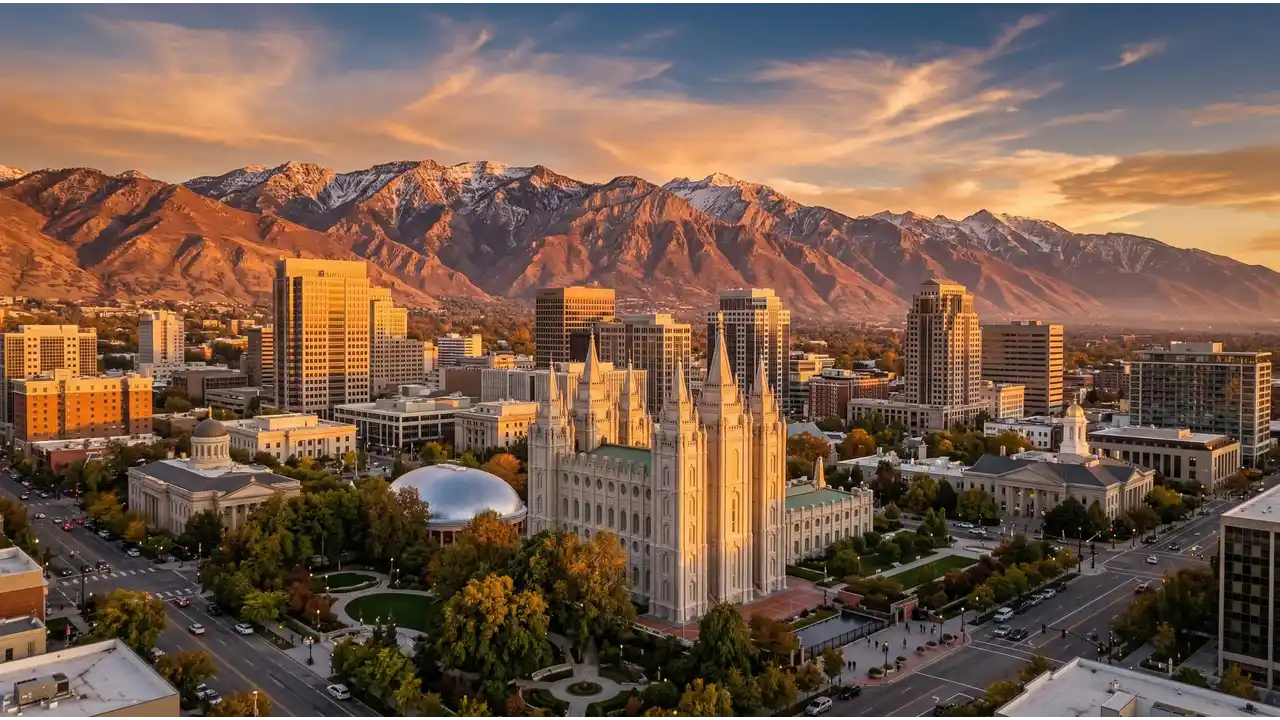
Salt Lake City sits in a high-altitude valley surrounded by the Wasatch Range. The population is around 200,000 in the city proper, with 1.2 million in the metro area. Most residents are younger than the US median, reflecting both university enrollment and migration from coastal tech hubs. Winters are cold and snowy; summers are dry and warm. Daily life centers on outdoor recreation (skiing, hiking, mountain biking are minutes away), a strong job market in tech and healthcare, and a relatively car-dependent layout outside downtown. Public transit exists but is limited compared to major metros. The city has a large LDS (Mormon) population, which shapes some cultural and social rhythms.
💡 Local Insights
Salt Lake City · 2026
Salt Lake City's cost profile reflects a competitive job market and growing desirability, but it remains cheaper than coastal US metros. Housing runs $1,362/month on average, but varies sharply by location. Downtown and Sugar House neighborhoods run higher; Taylorsville, Murray, and West Valley run lower. New construction and young demographics keep vacancy rates relatively healthy, which moderates pressure. Groceries average $488/month for a moderate diet; chains like Trader Joe's and Smith's are common. Eating out costs less than Denver or Seattle, with casual meals around $12-16. Public transit (UTA buses and light rail) costs $70/month for unlimited monthly passes. A car is nearly essential outside downtown, adding significant costs. Major drivers of higher costs are housing demand from tech workers (particularly those relocating from the Bay Area) and limited housing supply. Expats often find Salt Lake City a soft landing: English-speaking, good schools, outdoor culture, and lower costs than tech hubs. However, the LDS cultural dominance takes adjustment for some newcomers.
Frequently Asked Questions
How much does it cost to live in Salt Lake City per month?
A moderate lifestyle costs $2,875/month. Housing runs $1,362/month on average. Groceries total about $488/month for a household buying standard items at major chains. Transport (car payment, insurance, gas, or transit pass) averages $400-600/month depending on whether you own a vehicle. Utilities are roughly $150-200/month. The remaining budget covers dining out, entertainment, phone, and incidentals. Budget-conscious living runs around $1,725/month, while a comfortable lifestyle with dining and travel runs $4,456/month.
What is the average rent in Salt Lake City?
Median rent is $1,362/month. A one-bedroom in downtown or Sugar House runs $1,500-1,800. Two-bedrooms in the same areas run $1,900-2,400. More affordable suburbs like Taylorsville, Murray, West Valley, and Draper offer one-bedrooms at $1,100-1,350 and two-bedrooms at $1,400-1,700. Rental prices have climbed steadily over the past five years as tech firms expanded and remote workers relocated. Utilities (electric, gas, water, internet) add $150-250/month. Most landlords require proof of income at 3x rent and accept standard applications.
Is Salt Lake City cheap to live in for expats?
Salt Lake City is moderately priced for expats, cheaper than San Francisco, Seattle, Austin, or Denver, but pricier than most non-coastal US metros or most overseas locations. It attracts tech-sector expats who've priced out of the Bay Area. Quality of life metrics (air quality outside winter, outdoor access, education, safety) are strong. English is universal, and the job market in tech and healthcare is robust. However, the LDS cultural presence is significant and worth understanding before moving. International expats from Asia and Europe often find it more affordable than home cities but appreciate the infrastructure more than the cultural texture.
How much does food cost per month in Salt Lake City?
Groceries run about $488/month for a household of one eating a moderate diet. A gallon of milk costs roughly $3.50-4, eggs $2.50-3 per dozen, chicken breast $7-8 per pound, and bananas $0.60 per pound. Trader Joe's, Smith's, and Costco are primary options. Eating out is cheaper than coasts: casual lunch runs $12-15, casual dinner $16-22. Coffee from chains runs $5-6. Grocery prices track national averages; no significant local premium or discount. Seasonal produce (fruit from local orchards) appears May through September and can save money on produce.
What salary do you need to live comfortably in Salt Lake City?
A comfortable lifestyle costs $4,456/month, translating to roughly $53,500 annually before tax. This assumes housing $1,362/month, groceries, moderate dining out, car ownership, utilities, and discretionary spending. Utah's state income tax is 4.65%, and there is no local income tax. Federal tax adds another 12-22% depending on bracket. Actual take-home after taxes is roughly $35,000-38,000. Expats and remote workers should factor in whether they're taxed in Utah or their home country. Tech roles in Salt Lake typically start $65,000-75,000, which comfortably covers the comfortable tier.
How does the cost of living in Salt Lake City compare to other places?
Salt Lake City's moderate lifestyle costs $2,875 per month, with housing running $1,362 per month. This puts it slightly above Cincinnati, where a moderate lifestyle is $2,775 monthly and housing averages $1,206. You'll find Salt Lake City meaningfully cheaper than Seattle, which runs $3,950 for the same moderate lifestyle and $2,177 for housing alone. If you're comparing to smaller metros, Oklahoma City is the most affordable option at $2,400 monthly, with housing at $891. Salt Lake City sits in the middle tier of mid-sized American cities. Your money goes furthest in Oklahoma City, farthest in Seattle. The difference between Salt Lake City and Cincinnati is minimal, so the choice between them comes down to job market, climate, and local factors rather than cost alone.
Yes, but with constraints. A budget lifestyle means finding a shared rental or suburb one-bedroom at $900-1,100, leaving $825/month for everything else. Groceries must stay disciplined at $350-400/month. Eating out is rare. A car is nearly mandatory; a used vehicle plus insurance and gas can run $400-500/month, leaving little buffer. This budget works for students (especially LDS missionaries returning with housing support), very young professionals, or those with supplementary income or family support. Many people on this budget live in roommate situations or commute 20-40 minutes from cheaper suburbs. It is possible but requires deliberate choices and no emergencies.