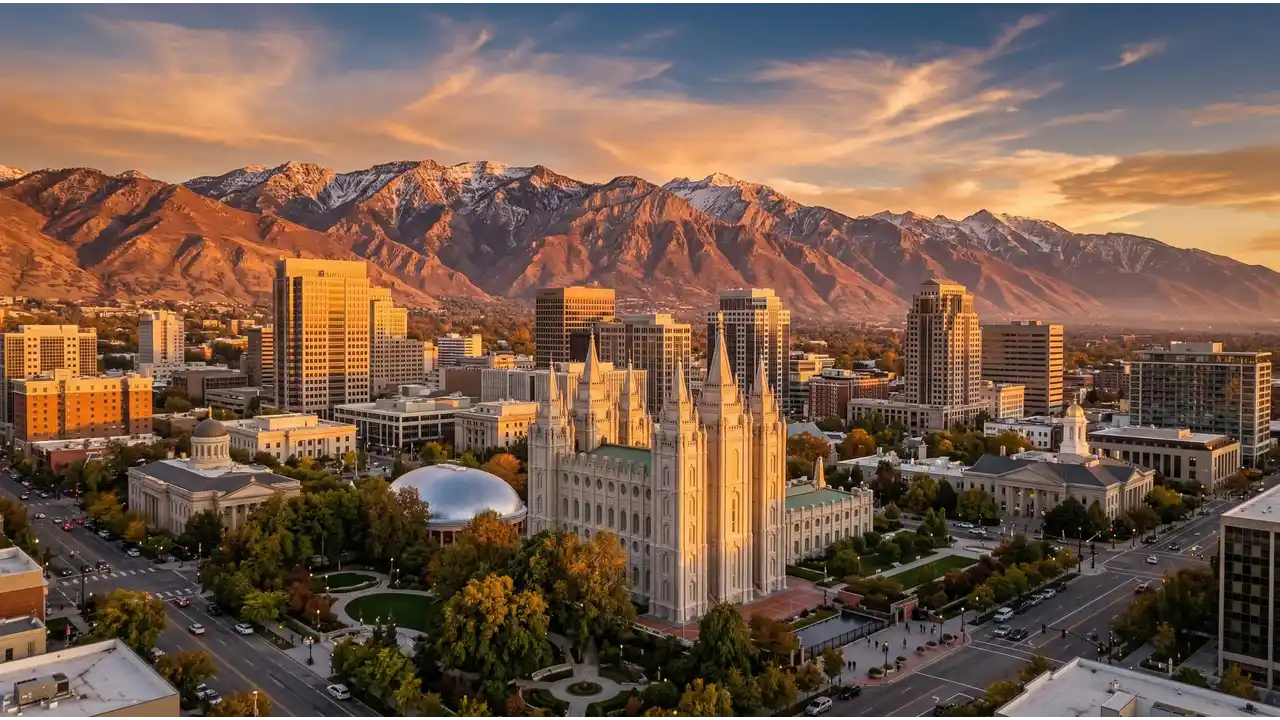
Idaho Falls is a mid-size city of about 60,000 in eastern Idaho, built around the Snake River and hydroelectric history. The population is stable, family-oriented, and heavily Mormon (about 60% of the city). Winters are cold and long, dropping to 0°F or below; summers are dry and warm. Most residents work in healthcare, manufacturing, nuclear research, or agriculture. Daily life centers on outdoor recreation in nearby mountains and rivers, church and community activities, and a relatively quiet downtown. The city has grown modestly in recent years but retains small-town character.
💡 Local Insights
Idaho Falls ID · 2026
Idaho Falls delivers genuine affordability for a US city. Housing runs around $1,116 per month for a moderate-lifestyle renter, with one-bedroom apartments typically $800 to $1,200 and three-bedroom rentals $1,200 to $1,600. Homeownership is accessible; median home prices sit well below the national average. Groceries cost about $503 monthly for a household, comparable to national averages. Eating out is cheap: casual meals run $12 to $18, mid-range dinners $25 to $45 per person. Utilities average $120 to $160 per month. Transportation requires a car; there is no public transit system. Gas and car ownership are inexpensive by national standards. The trade-offs are real: winters demand snow tires and heating costs, entertainment options are limited compared to larger cities, and the job market outside healthcare and nuclear research is narrow. Expats find the cost structure favorable against coastal US cities but should expect isolation and a religious-majority culture.
Frequently Asked Questions
How much does it cost to live in Idaho Falls ID per month?
A moderate lifestyle in Idaho Falls costs $2,675 per month. This breaks down roughly as: housing $1,116, groceries $503, utilities $140, transportation $400, dining out and entertainment $280, and personal care and miscellaneous $236. The budget tier, adequate for essentials, runs $1,605 per month. A comfortable lifestyle with more dining out, recreation, and household flexibility costs $4,146 per month. Actual costs vary significantly based on household size, work location, and lifestyle choices.
What is the average rent in Idaho Falls ID?
Average rent is roughly $1,116 per month for a moderate-lifestyle household. One-bedroom apartments in central or moderately desirable areas rent for $800 to $1,100 per month. Three-bedroom houses and larger apartments rent for $1,200 to $1,600 per month. Newer or upgraded units, or those in preferred neighborhoods near parks or schools, command the higher end. Utility costs add $120 to $160 monthly. Prices have risen modestly over recent years but remain well below national medians for comparable-sized cities.
Is Idaho Falls ID cheap to live in for expats?
Yes, significantly cheaper than major US coastal or tech hub cities. Expats from Seattle, Portland, San Francisco, or the Northeast find housing costs notably lower and overall expenses more manageable. Compared to Western European cities, Idaho Falls is cheaper but less culturally dense and offers fewer international services. The trade-off is rural isolation and limited public transit. For expats relocating for remote work or positions with stable income, the low cost of living is a real advantage. Healthcare and education quality are adequate but not exceptional. The dominant Mormon culture and long, harsh winters surprise some newcomers.
How much does food cost per month in Idaho Falls ID?
Groceries for a moderate household cost about $503 per month, consistent with national USDA estimates. A pound of chicken breast runs $3 to $4; ground beef $4 to $5; a dozen eggs $2 to $3; milk $3.50 to $4; fresh produce varies seasonally, $1 to $3 per item. Eating out is affordable: casual dining (burgers, tacos, pizza) $12 to $18 per meal; mid-range restaurant dinners $25 to $45 per person. Grocery stores include local chains and national brands; prices are stable and competitive.
What salary do you need to live comfortably in Idaho Falls ID?
A comfortable lifestyle costs $4,146 per month, suggesting a gross monthly income of $5,500 to $6,000 (accounting for taxes and other deductions). Annualized, that is roughly $66,000 to $72,000 gross income. This allows for dining out regularly, recreational spending, home improvements, and modest travel. A household with combined income above $70,000 will find Idaho Falls very comfortable and can build savings. Single earners at $50,000 to $60,000 can live well on the moderate budget of $2,675 per month, though less comfortably.
How does the cost of living in Idaho Falls ID compare to other places?
Idaho Falls sits in the middle of the US cost-of-living spectrum. A moderate lifestyle runs $2,675 per month, with housing at $1,116 per month.
To put this in perspective, San Antonio costs $2,575 monthly and is your closest peer, making Idaho Falls only slightly more expensive overall. Housing in San Antonio runs $1,030 per month, so the two cities are nearly equivalent.
If you're coming from a high-cost area, Idaho Falls feels genuinely affordable. Scottsdale costs $3,350 per month with housing at $1,729, making it substantially pricier. On the flip side, Cabo San Lucas is cheaper at $1,825 monthly, though that reflects a different lifestyle category entirely.
For most American moves, Idaho Falls offers reasonable housing costs without requiring the trade-offs of a major metro area.
Yes, but with real constraints. The budget tier of $1,605 per month covers rent ($800 to $950), groceries ($450), utilities ($120), basic transportation ($100), and minimal discretionary spending. This works for single adults or couples sharing rent, with no car payment, minimal dining out, and no travel. It requires discipline and limits entertainment, hobbies, and unplanned expenses. Medical costs, home repairs, or car trouble will strain the budget quickly. It is viable for short-term living or supplementary income but not sustainable long-term without income growth or external support.