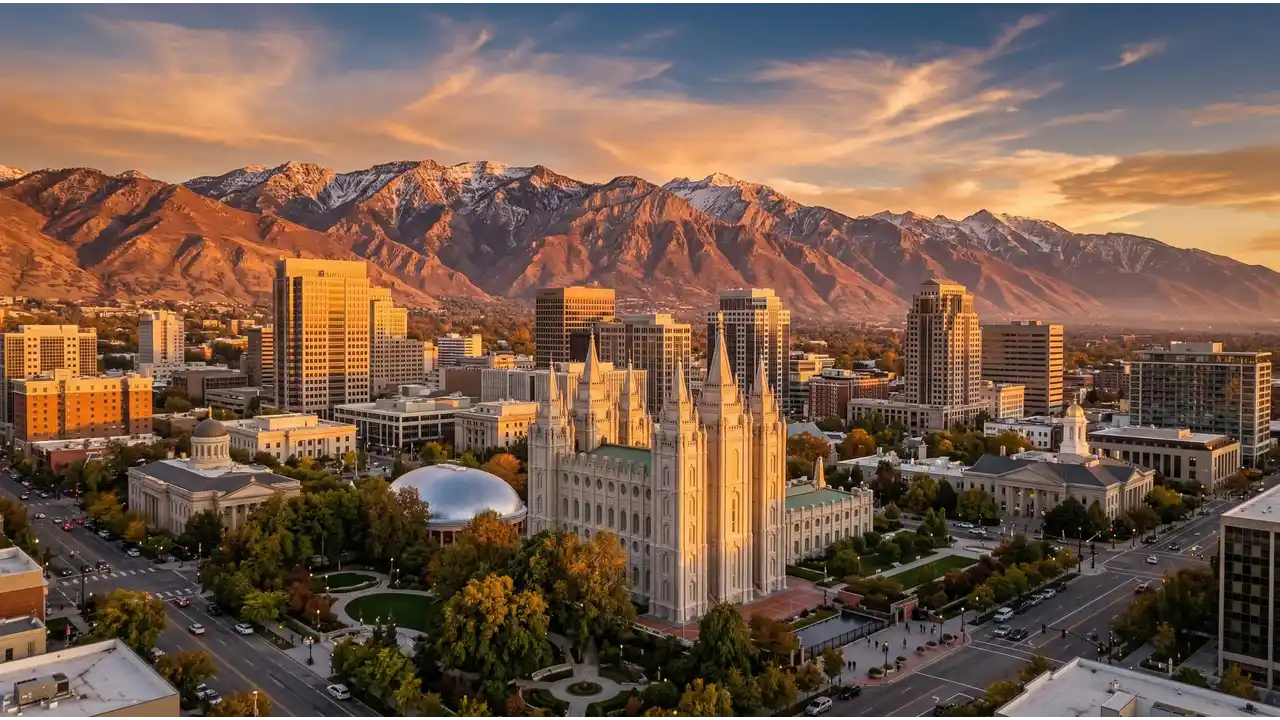
Provo is a college town in Utah County dominated by Brigham Young University. The population skews young, educated, and predominantly member of the Church of Jesus Christ of Latter-day Saints. Daily life centers on campus, family-oriented activities, and outdoor recreation. Winters are cold with occasional snow; summers are warm and dry. The city has grown significantly in the past decade, with tech companies and startups moving in alongside traditional industries. Public transit exists but most residents drive. The pace is relatively slow compared to major metros, with an emphasis on religious observance and family life.
💡 Local Insights
Provo · 2026
Provo's cost of living sits well below the US average, driven mainly by a younger demographic and university presence. Housing costs around $1,189 per month, which captures the real market: a one-bedroom apartment in central Provo runs $800 to $1,000; a two-bedroom $1,100 to $1,400. Shared housing with students or young professionals can drop below $700. Grocery costs average $495 per month for one person eating at home. Local supermarkets like Harmon's and WinCo Foods offer competitive prices. Eating out is cheaper than coastal cities, with casual meals at $8 to $12. Transportation is the second major variable. The city has UTA bus service, but owning a car is nearly essential for most residents. Gas and insurance add $200 to $300 monthly. Expats often find Provo's cost structure attractive compared to tech hubs like Seattle or San Francisco, though less diverse in some amenities. Local and expat pricing is virtually identical; discrimination is rare.
Frequently Asked Questions
How much does it cost to live in Provo per month?
A moderate lifestyle in Provo costs approximately $2,725 per month for one person. Housing runs $1,189, groceries $495, and transportation, utilities, and discretionary spending fill the remainder. A budget tier lifestyle is possible at $1,635 per month, cutting back significantly on dining out and entertainment. A comfortable lifestyle with more flexibility costs around $4,224 per month. These figures assume renting, not owning, and reflect current local market conditions.
What is the average rent in Provo?
Average rent in Provo is approximately $1,189 per month based on typical renter spending. A one-bedroom apartment in central Provo costs $800 to $1,000 monthly. Two-bedroom units run $1,100 to $1,400. Shared housing with other students or young professionals can be found for $600 to $750. Older residential areas near BYU campus tend to be cheaper than newer developments in north Provo. Utilities (electricity, water, internet) typically add $100 to $150 monthly. Competition for rental housing is intense during BYU enrollment periods (August, January).
Is Provo cheap to live in for expats?
Provo is affordable by US standards and genuinely cheap compared to major tech and coastal cities. A moderate lifestyle at $2,725 per month is achievable and stable. However, expats should expect challenges beyond cost. Social life revolves heavily around the LDS church, family units, and BYU. Nightlife and dining diversity are limited compared to major metros. International communities exist but are smaller. Expats from Europe or Asia often find the pace slower and suburban feel pronounced. If budget is the primary concern and you're comfortable with the local culture and climate, Provo delivers value. If you need urban density or religious diversity, reconsider.
How much does food cost per month in Provo?
Groceries cost approximately $495 per month for one person eating at home. Supermarkets like WinCo Foods and Harmon's offer competitive prices. Milk runs $3 to $4 per gallon, eggs $2 to $3 per dozen, chicken breast $6 to $8 per pound. A week of groceries for one person averages $115 to $130. Eating out is cheaper than coastal cities; a casual meal costs $8 to $12, lunch specials $7 to $9, dinner entrees $12 to $18. Food delivery apps charge standard fees. Farmers markets operate seasonally (summer and fall) with lower produce prices.
What salary do you need to live comfortably in Provo?
A comfortable lifestyle in Provo costs approximately $4,224 per month, which suggests an annual income of around $50,000 to $55,000 for a single person, or $65,000 to $70,000 if supporting dependents. This budget allows dining out regularly, entertainment, travel savings, and modest emergency reserves. If you earn $50,000 to $60,000 annually and live frugally, you can comfortably cover rent, food, transport, and savings. Couples with combined income above $70,000 have substantial discretionary spending. BYU salaries, tech sector jobs, and state employment typically meet or exceed these thresholds.
How does the cost of living in Provo compare to other places?
Provo's moderate lifestyle costs $2,725 per month, with housing accounting for $1,189 of that. This makes it moderately priced within the mountain West, though not the cheapest option in its region.
Compared to peer cities, Provo runs slightly higher than Tucson, where a moderate lifestyle costs $2,550 per month and housing is $930. If you're considering a move to Europe, Mannheim is substantially cheaper at $1,950 monthly with housing at $801. On the other end, Seattle is considerably more expensive at $3,950 per month, with housing alone reaching $2,177.
The difference largely reflects Provo's university-driven economy and growing tech sector. For families or remote workers, Provo offers reasonable access to amenities without West Coast pricing, though it costs more than similar-sized cities in the Southwest.
Yes, but with real constraints. A budget tier lifestyle at $1,635 per month is feasible with discipline. Rent must stay under $700 (shared housing or older single-bedroom units), groceries $350 to $400 (cooking at home, minimal eating out), and transport $150 to $200 (transit or used car with minimal upkeep). Entertainment and discretionary spending shrink to near zero. This budget works for students or young professionals with minimal dependents or debt. Any unexpected expense (car repair, medical cost, utility spike) creates hardship. Sustainable living at this level requires roommates and careful planning, but it is possible.