Cost of Living in Patagonia (2026)
 By Jo Berks, Global Cost of Living Research & Data Analyst Published June 2026
 What it really costs to live in Patagonia in 2026, across both Argentina and Chile. Patagonia is not one cost market, it is the most expensive part of two very different countries. Every figure is dated 2026, sourced from INDEC, INE Chile, official park tariffs and dated property listings, and quoted in US dollars with the local-currency original and rate stated.
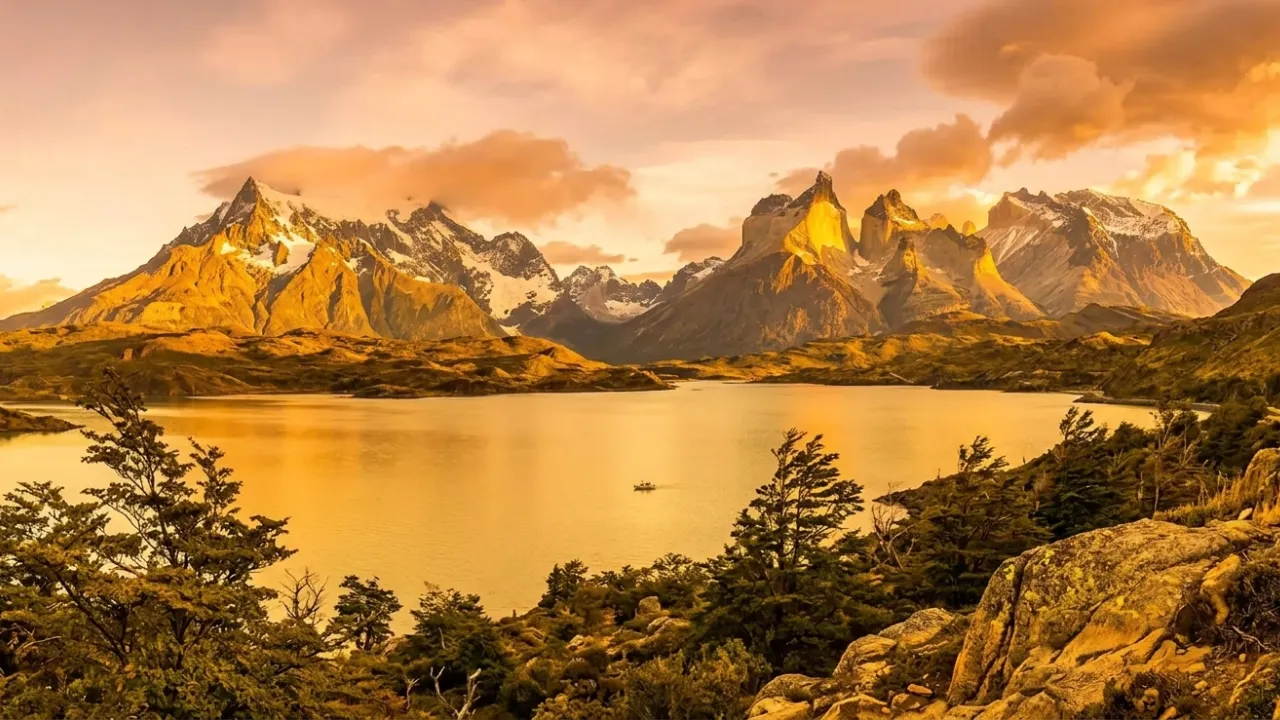
Patagonia spans the southern third of South America, split between Argentina and Chile along the Andes.
Patagonia is the most expensive part of each. The gap that matters is not the price, it is the currency: Argentine prices climb about 32% a year, Chilean prices about 2%.
Single-person moderate cost, CostLiving model. Patagonia sits above both national figures.
- Patagonia is a region, not a country. It is split between Argentina (the larger eastern share) and Chile (the western share), divided by the Andes.
- Argentine Patagonia is the most expensive region of Argentina. Ushuaia, the southernmost city, costs an estimated 30 to 45% more than Buenos Aires.
- Chilean Patagonia anchors near Chile's national figure of about $1,825 a month for a single person, with stable prices and no parallel exchange rate.
- A one-bed runs roughly $520 to $1,100 a month in Bariloche and $300 to $485 in Puerto Montt, on dated asking prices.
- Argentina's blue-dollar gap has collapsed from over 100% in 2023 to a few percent, so a foreign card now gives close to the street rate.
- Both sides carry an isolation premium: everything has to be shipped a very long way south.
Where is Patagonia?
Patagonia is the southern third of South America, not a country in its own right. It is divided between two: Argentina holds the larger, eastern share, from the lake town of Bariloche down through El Calafate to Ushuaia at the very tip, while Chile holds the narrow western strip, from Puerto Montt down through Coyhaique to Punta Arenas and the Torres del Paine national park. The Andes run down the middle and form the border. That split is the single most important fact for cost, because the two sides use different currencies that behave in opposite ways.
Patagonia spans southern Argentina (east) and Chile (west), divided by the Andes. Towns and national parks shown at their true locations.
Why Patagonia isn't one cost market
Most cost of living guides treat Patagonia as a single place and quote one number. That is misleading. The region straddles two countries whose currencies could hardly be more different. Argentina ran triple-digit inflation as recently as 2024 and its peso is still losing roughly a third of its value a year, so any Argentine price is a fast-moving snapshot. Chile, next door, had inflation of just 2.4% in early 2026, below its central bank target, and its peso is stable. The same glass of wine costs a predictable amount in Puerto Natales for months at a time, and an unpredictable amount in El Calafate.
Both sides do share one thing: a premium for remoteness. Patagonia is thinly populated and thousands of kilometres from where most goods are made, so food, fuel and consumer items cost more than in Buenos Aires or Santiago. That is why Patagonia is the most expensive region of Argentina, and why the Chilean far south sits above the Chilean national average. The honest way to read the region is two anchors, not one.
| Country | National (USD/mo) | Capital | Capital (USD/mo) | Inflation |
|---|---|---|---|---|
| Argentina | $1,675 | Buenos Aires | $2,025 | 32.4% (April 2026, falling) |
| Chile | $1,825 | Santiago | $1,700 | 2.4% (February 2026, stable) |
Patagonia is the most expensive part of cheap, volatile Argentina, sitting next to a stable, dollar-reliable Chilean south. It is one region read in two currencies.
CostLiving, cost of living in Patagonia 2026Cost of living in Argentine Patagonia
Argentine Patagonia is the priciest corner of an otherwise inexpensive country. Argentina as a whole costs a single person about $1,675 a month, but the south runs well above that. Official INDEC data confirms Patagonia is the highest-inflation region in the country, and the costliest household food baskets are all in the Patagonian provinces, with Santa Cruz topping the national ranking.
Ushuaia, the world's southernmost city, is the most expensive place to live in Argentina. Local cost comparisons put it 30 to 45% above Buenos Aires, which would place a single person in the rough range of $2,650 to $2,950 a month. Bariloche, the lakeside resort town, advertised one-bed apartments at around $520 to $1,100 a month in 2026, with some tourist-oriented units quoted directly in dollars. El Calafate, the gateway to the Perito Moreno glacier, is a small, seasonal town where prices swing with the tourist calendar. Treat all of these as indicative: Argentina publishes no town-level rent data, so the figures come from dated property listings and move with inflation.
Cost of living in Chilean Patagonia
Chilean Patagonia behaves very differently. Chile costs a single person about $1,825 a month nationally, a touch more than its capital Santiago at $1,700, and the southern regions of Los Lagos, Aysén and Magallanes add a premium on top for their isolation. The crucial difference from Argentina is stability: with inflation at 2.4% a year and no parallel exchange rate, a Chilean price you read today is still broadly accurate next month.
Puerto Montt, the gateway to the Chilean lake district and the start of the southern road, advertised one-bed apartments at roughly $300 to $485 a month in 2026. Further south, Punta Arenas and Puerto Natales are the bases for Torres del Paine, where the local economy is built around trekking season. Chile's official food basket was about CLP 90,261 per person in March 2026, equivalent to roughly $101 a month at 890 pesos to the dollar, a clean primary figure from the Ministry of Social Development.
Key Patagonia cost data, 2026
The table below is the core dataset behind this page. Because Patagonia has no single clean price index, we have labelled every figure with its source and a confidence rating, rather than presenting estimates as hard facts. "Primary" means an official statistic or tariff, "good" means a reliable operator or comparison source, "indicative" means a dated property-portal listing, and "verify live" means a recently changed figure you should confirm before relying on it.
| Item | Place | Figure | Source | Confidence |
|---|---|---|---|---|
| Most expensive city | 🇦🇷 Ushuaia | ~$2,650 to $2,950/mo | Derived: Buenos Aires + 30 to 45% premium | Good |
| One-bed rent, asking | 🇦🇷 Bariloche | $520 to $1,100/mo | Argenprop, Jun 2026 | Indicative |
| One-bed rent, asking | 🇦🇷 Ushuaia | ~$550+/mo | Argenprop, Oct 2025 | Indicative |
| One-bed rent, asking | 🇨🇱 Puerto Montt | $300 to $485/mo | Yapo / Trovit, 2026 | Indicative |
| Food basket, per person | 🇨🇱 Chile (national) | ~$101/mo | Min. Desarrollo Social, Mar 2026 | Primary |
| Food basket, family of four | 🇦🇷 Santa Cruz | ~$530/mo | Analytica / UNPSJB, Jul 2025 | Indicative |
| Park entry, foreign adult | 🇦🇷 Los Glaciares | ~$31 (ARS 45,000) | argentina.gob.ar, 2025 | Primary |
| Park entry, foreign adult | 🇨🇱 Torres del Paine | ~$36/day (CLP 32,400) | CONAF, May 2026 | Verify live |
| Intercity bus, one way | 🇨🇱 Punta Arenas to Puerto Natales | ~$8 (CLP 7,400) | Buses Fernández, 2026 | Good |
The pattern is clear: the figures we can state with confidence are the official ones (food baskets, park fees, national inflation), while the town-level rents are indicative listings, not statistics. That is an honest limit of the available data for a remote region, not a gap we have papered over.
Rent across Patagonia
Rent is the biggest single cost and the hardest to pin down, because neither Argentina nor Chile publishes town-level rental statistics for Patagonia. The figures below are advertised asking prices from property portals, dated and converted to dollars, and should be read as indicative ranges rather than averages.
| Town | Country | One-bed rent (USD/mo) | Note |
|---|---|---|---|
| Bariloche | Argentina | $520 to $1,100 | Some units quoted in USD |
| Ushuaia | Argentina | ~$550+ | Rising; Oct 2025 listing |
| Puerto Montt | Chile | $300 to $485 | Stable currency |
A practical note for the Argentine side: leases for locals are in pesos with periodic adjustments, while units aimed at foreigners and tourists are often quoted in dollars. With inflation falling and the exchange rate stable since controls were lifted, the two have moved closer, but it is still worth clarifying the currency before signing anything.
The currency divide
This is the part most cost guides get wrong, so it is worth getting right. On the Argentine side, annual inflation was 32.4% in April 2026, down dramatically from the triple-digit rates of 2023 and 2024. The bigger shift for anyone spending money there is the exchange rate. For years Argentina had a tangle of dollar rates, with the parallel "blue" cash rate trading 30 to 50% above the official one, so visitors carried physical dollars to swap on the street. In 2025 the government lifted the controls, and the rates converged to within a few percent. A foreign card now gives close to the real rate, so the old blue-dollar advice is largely obsolete.
On the Chilean side there is no such drama. Inflation was 2.4% in February 2026, the lowest since 2020 and below the central bank's target, and there is a single exchange rate at around 890 pesos to the dollar. The practical upshot: budget the Chilean leg in advance with confidence, and treat every Argentine peso figure as a snapshot that will drift upward even as the dollar cost stays broadly flat. For the live picture, the INDEC and INE Chile price series are the cleanest references.
Park fees and getting around
In Patagonia, national park entry and intercity transport are genuine budget lines, not afterthoughts, because the landscape is the whole point and the distances are vast. On the Argentine side, Parque Nacional Los Glaciares, which covers the Perito Moreno glacier and the Fitz Roy peaks near El Chaltén, charges foreign adults ARS 45,000, about $31, a primary figure from the national parks authority.
On the Chilean side, Torres del Paine moved to a new tariff system on 1 May 2026. Foreign adults pay an estimated CLP 32,400, roughly $36, for a single day, with a multi-day pass also available. This figure changed recently and the official portal is the only sales channel, so confirm the current rate at pasesparques.cl before you travel. For transport, the well-trodden bus between Punta Arenas and Puerto Natales costs about CLP 7,400, roughly $8, one way, with around 22 services a day.
Which side is cheaper?
For a visitor or remote worker paid in dollars, the Argentine side is usually cheaper day to day, particularly for restaurants, domestic services and intercity travel, but it is volatile and prices climb in peso terms through the year. The Chilean side costs more on paper yet is far more predictable, with a stable currency and transparent pricing. Many people travelling the region do the sensible thing and split it: keep day-to-day costs low in Argentina, then cross the border for Torres del Paine on the Chilean side.
Share the data
Frequently asked questions
Methodology and sources
All figures are 2026. National anchors use CostLiving's single-person model; town-level figures are sourced individually and confidence-labelled, because no clean cross-border price index exists for Patagonia. Numbeo and other crowdsourced aggregators are excluded.
Why two anchors, not one number
Patagonia spans Argentina and Chile, two countries with opposite currency regimes and no shared price-level index. A single "Patagonia costs $X" figure would be a guess. We anchor each side to its national figure and layer on the regional premium that official data supports.
What is primary and what is indicative
Inflation, food baskets and park fees are official statistics or tariffs (labelled Primary). Town rents are dated property-portal asking prices (labelled Indicative), because neither country publishes town-level rent data for the south.
Currency and conversion
Argentine pesos are converted at about 1,450 to the dollar and Chilean pesos at about 890, both mid-2026. Argentine peso figures are perishable under 32% annual inflation and dated accordingly; Chilean figures are stable at 2.4% inflation.
What changed recently
Argentina lifted its currency controls in 2025 and the parallel dollar rates converged. Torres del Paine introduced a new entry tariff on 1 May 2026. Confirm that fee at the official portal before travelling.
Primary sources
These figures are a single-person reference. For full country breakdowns, see the Argentina and Chile cost of living guides, or read the full 2026 Argentina study. Browse all CostLiving location guides.
Cite this page