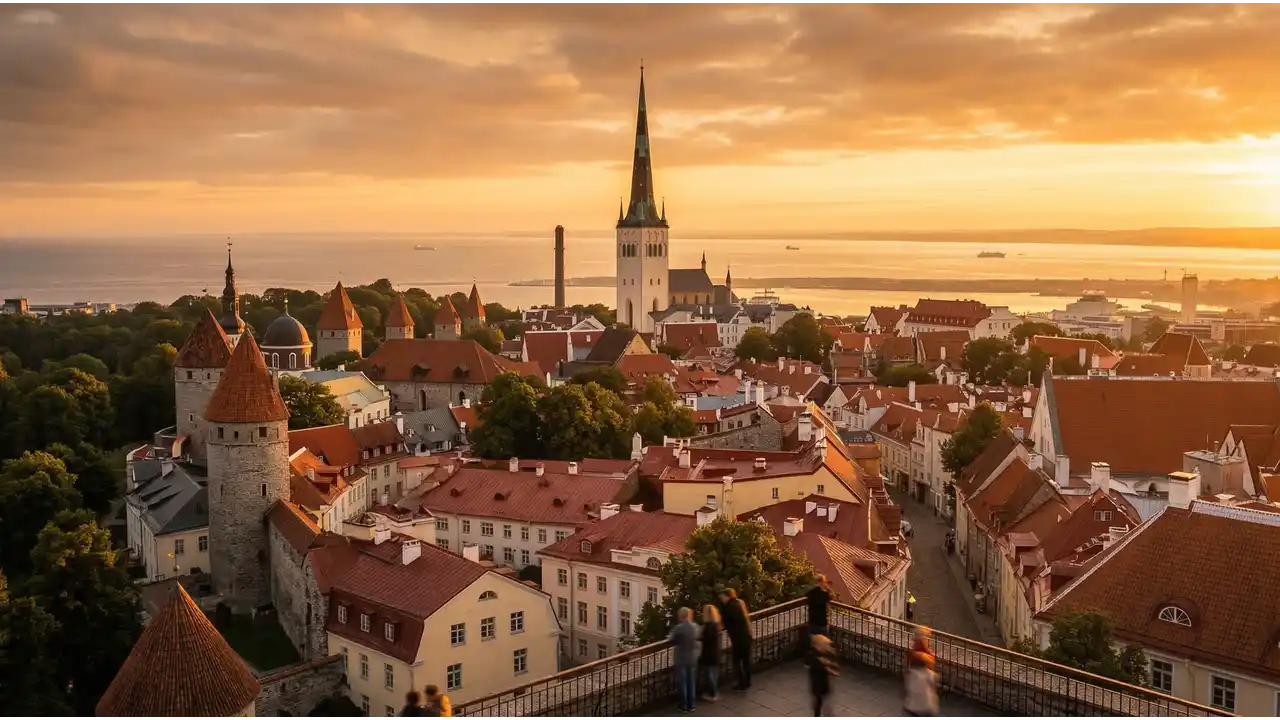
Estonia is a small Baltic nation of about 1.3 million people on the eastern edge of the European Union. The country is heavily digital—most services, from banking to government functions, run online. Winters are dark and cold, averaging around freezing from December through February. Summers are mild and brief. The population is ethnically Estonian, with a Russian-speaking minority, particularly in the northeast. Daily life centers on Tallinn, the capital, or smaller cities like Tartu and Pärnu. Public transport is free for residents in many cities. Most Estonians speak English, especially younger generations. The culture is reserved but welcoming to foreigners who make effort to integrate.
💡 Local Insights
Estonia · 2026
Estonia's cost of living reflects a developed EU economy with post-Soviet wage levels. Housing at $685/month covers a one-bedroom apartment in central Tallinn or a larger space outside the center, though prices have risen steadily. Grocers like Selver, Maxima, and Coop dominate, and a month of groceries runs around $344 for one person eating a mix of local and imported goods. Public transport is free for residents holding a residence permit, which eliminates a major expense for many expats. Utilities typically cost $80-120/month. Eating out is inexpensive compared to Western Europe: a restaurant meal runs $8-15, though international restaurants cost more. Alcohol and tobacco carry high excise taxes. Expats often pay slightly more for furnished rentals and English-language services. The budget tier of $1,050/month is tight but possible outside Tallinn or with careful spending. The moderate figure of $1,750/month allows for some comfort, eating out occasionally, and modest travel.
Frequently Asked Questions
How much does it cost to live in Estonia per month?
A moderate lifestyle costs around $1,750/month. Housing runs $685/month, groceries $344/month, and utilities roughly $100/month. Transport is free for residents. Eating out occasionally, entertainment, and personal care add another $400-500. A tight budget works at $1,050/month if you live outside Tallinn and cook at home. A comfortable lifestyle with regular dining out, travel, and hobbies costs closer to $2,713/month. Actual spending depends heavily on whether you're in Tallinn (more expensive) or regional cities (cheaper).
What is the average rent in Estonia?
Average rent is around $685/month for a one-bedroom apartment. In central Tallinn, expect $700-850/month for a one-bedroom; outside the center, $550-700/month. Two-bedroom apartments in the center run $900-1,200/month. Regional cities like Tartu and Pärnu are noticeably cheaper, with one-bedroom rents at $450-600/month. Furnished rentals for short-term lets cost 20-40 percent more. Utilities (heating, water, electricity) add $80-120/month. Most leases require a deposit equal to one month's rent. Long-term rentals to locals are generally cheaper than furnished expat-marketed apartments.
Is Estonia cheap to live in for expats?
Estonia is moderately cheap by EU standards, comparable to Poland and the Czech Republic but more expensive than Romania or Bulgaria. It's significantly cheaper than Western Europe, Scandinavia, or major Western cities. The main cost advantage is free public transport for residents and low housing compared to Western Europe. Disadvantages: furniture and imports are pricey, utilities in winter are substantial, and expat-marketed housing commands premiums. For remote workers earning Western salaries, Estonia offers good value. For those earning local wages, stretching the $1,750 moderate budget requires discipline. Expats with family-size housing needs or specific imported foods face higher costs than typical local residents.
How much does food cost per month in Estonia?
Groceries for one person cost roughly $344/month buying at supermarkets like Selver, Maxima, or Coop. Local bread runs $1-2, milk $1-1.50/liter, chicken $5-7/kg, and seasonal vegetables $2-4/kg. Imported goods cost significantly more. Eating out is inexpensive: a main course at a casual restaurant is $8-15, a coffee $2-3. Lunch specials at local eateries run $5-8. Alcohol carries high excise tax (beer $1.50-3/bottle, wine $8-20/bottle). Markets in Tallinn and Tartu offer fresh produce at lower prices than supermarkets. Buying local and seasonal produces the lowest cost diet.
What salary do you need to live comfortably in Estonia?
A comfortable lifestyle costs around $2,713/month. For a single person, a gross monthly salary of $3,200-3,500 is realistic after taxes, assuming employer contributions. Couples can live comfortably on combined $5,500+. The Estonian income tax rate is roughly 20 percent on wages plus social contributions. Local median salaries in Tallinn are around $1,500-1,800/month, so expats or remote workers earning Western salaries find Estonia genuinely affordable. If earning locally, $2,000+/month is solid for a single person, $3,500+/month for a family. The comfortable tier allows for dining out twice weekly, modest travel, hobbies, and savings.
How does the cost of living in Estonia compare to other places?
Estonia sits in the middle tier of European costs. A moderate lifestyle runs $1,750 per month, with housing at $685 monthly. That puts it slightly above Croatia, where a moderate lifestyle costs $1,675 monthly and housing runs $738. Bulgaria is notably cheaper at $1,225 for a moderate lifestyle and $455 for housing, making it one of the continent's better values. On the other end, Norway is substantially dearer at $2,550 monthly, with housing alone reaching $1,197. Estonia offers reasonable pricing compared to Western and Nordic Europe, though it's pricier than the Balkans. If you're coming from North America or Western Europe, you'll notice savings. If you're relocating from southern or eastern Balkan countries, expect costs to climb moderately.
Yes, but with restrictions. The budget tier of $1,050/month works if you live outside Tallinn (Tartu, Pärnu, or smaller towns), cook nearly all meals, avoid eating out, use free public transport, and skip travel or entertainment. Rent on this budget is $450-550/month outside the center. Groceries at $344/month leaves $250-300 for utilities, phone, and essentials. Any unexpected cost strains the budget severely. This tier suits students, retirees with low needs, or those with heavily subsidized housing. In Tallinn, $1,050/month is very tight unless you have employer housing subsidies or share an apartment. The budget works short-term but offers little margin for error or quality of life.