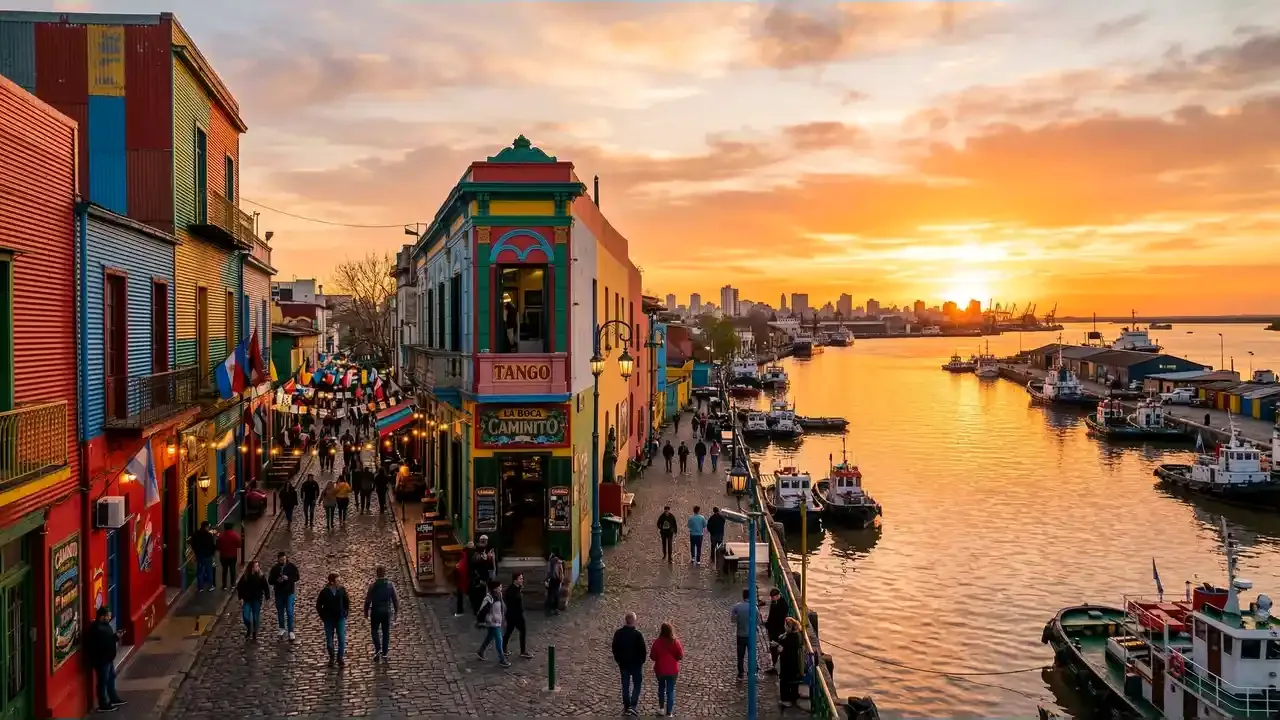
Santiago is Chile's capital and largest city, spread across a high-altitude valley in the central Andes with a population around 5.3 million in the metro area. The climate is Mediterranean: warm, dry summers (December to February) and mild winters with occasional rain. Daily life centers on dense neighborhoods like Providencia, Ñuñoa, and Lastarria, where you walk to cafes, markets, and metro stations. The city has significant income inequality, with expensive neighborhoods in the east (foothills) and more affordable areas toward the west. Traffic is heavy, public transit is extensive, and the air quality varies seasonally. Most residents speak Spanish; English is limited outside tourist and expat zones.
💡 Local Insights
Santiago · 2026
Santiago's cost of living sits between Buenos Aires and Lima, with housing as the primary expense driver. Rent of $562/month gets you a one-bedroom apartment in middle-class neighborhoods like Ñuñoa or a shared flat in Providencia. Prices spike sharply in eastern hills (Vitacura, Las Condes) and central areas; affordability increases toward the west and south. Groceries run $230/month for a single person cooking at home, with fresh produce and local staples cheap, imported goods expensive. Eating out is reasonable outside tourist zones (lunch menus around $6-10). Public transport (metro, buses, micros) costs under $50/month with a multi-use card. Utilities add $40-60. Expats often pay premiums for furnished rentals and English-language services. Negotiate rent directly; many listings are informal. Shopping at farmers markets (ferias) and local supermarkets like Líder or Santa Isabel cuts food costs significantly.
Frequently Asked Questions
How much does it cost to live in Santiago per month?
A moderate lifestyle costs $1,275/month. This covers housing at $562/month, groceries at $230/month, utilities around $50/month, public transport $40/month, and $393 for dining out, entertainment, and personal items. On a budget tier of $765/month, you cut dining out and entertainment sharply, stick to basic housing, and cook almost all meals. A comfortable tier of $1,976/month allows for better accommodation, regular dining out, and travel. Individual needs vary widely by neighborhood and lifestyle choices.
What is the average rent in Santiago?
Average rent is $562/month for a one-bedroom apartment in middle-class neighborhoods. In Ñuñoa, Providencia, or Lastarria, expect $500-650/month for a furnished or unfurnished one-bedroom. Shared apartments run $300-450. Eastern hills (Vitacura, Las Condes) command $800-1,200+. Western and southern districts (Estacion Central, San Miguel) run $400-500. Prices depend on amenities, size, and proximity to metro. Furnished rentals for expats typically cost 20-30% more than local rates. Most landlords require proof of income or a local guarantor.
Is Santiago cheap to live in for expats?
Santiago is moderately affordable compared to North American and Western European cities, but not cheap. Housing is the main cost shock for expats accustomed to furnished, inclusive rentals; landlords often target expats with higher prices. Groceries, transport, and dining out are inexpensive by Western standards. If you live locally (unfurnished apartment, cook at home, use public transit), $1,275/month is realistic. If you seek familiar brands, expat-friendly housing, and frequent dining out, costs climb to $1,600-2,000+. Salary goes further than in US cities, but earning power often drops for relocating professionals.
How much does food cost per month in Santiago?
Groceries cost around $230/month for one person cooking at home. Fresh produce, eggs, chicken, and local staples are cheap at supermarkets like Líder or farmers markets (ferias). A kilo of chicken runs $4-5, tomatoes $0.80-1.50/kg, bread $0.40-0.60/loaf. Imported goods and organic products are significantly more expensive. Eating out is affordable: lunch menus at neighborhood restaurants cost $6-10; a casual dinner $12-18. Coffee at cafes is $2-3. Alcohol (wine, beer) is cheap, especially local wines. Budget-conscious living means cooking most meals; regular dining out easily doubles food spending.
What salary do you need to live comfortably in Santiago?
A comfortable lifestyle requires around $1,976/month. This allows for a one-bedroom apartment in a good neighborhood, regular dining out 2-3 times weekly, weekend activities, and occasional travel. In US dollars, that's roughly $23,700/year before taxes. If you earn in USD or EUR, this is very achievable; if earning in local pesos, your purchasing power depends on your role and employer. Most middle-class Santiaguinos earn $1,200-1,800/month (in pesos, much higher in local terms). Remote work at foreign wages provides substantial cushion. Without reserves, $1,275/month requires discipline; $1,976/month offers genuine comfort and buffer.
How does the cost of living in Santiago compare to other places?
Santiago sits in the middle range for Latin American cities. A moderate lifestyle costs $1,275 per month here, with housing running $562 per month. That makes it slightly pricier than Tegucigalpa, where a moderate lifestyle runs $1,225 monthly with housing at $496. If you're coming from somewhere cheaper, Manaus costs $950 for a moderate lifestyle and $352 for housing, so Santiago will feel noticeably more expensive. On the other end, Cancún is substantially dearer at $1,800 per month for a moderate lifestyle and $912 for housing. Within Chile, Santiago is the most expensive city by a significant margin, though still reasonable compared to major North American or European centers. Your dollar stretches furthest in smaller Chilean towns and northern desert regions.
Yes, but with significant trade-offs. $765/month requires shared housing ($250-350/month), minimal dining out, cooking almost entirely at home, and public transport only. You'll live in western or southern neighborhoods, far from central or eastern areas. Groceries must come from markets and discount supermarkets; any social life involves free or cheap activities. Medical emergencies, travel, or car ownership aren't feasible. This works for students, digital nomads with low-cost housing, or those with local family support. It's survivable but leaves little margin for emergencies or unplanned costs. Most expats find this uncomfortable beyond 3-6 months; locals with family networks manage better.