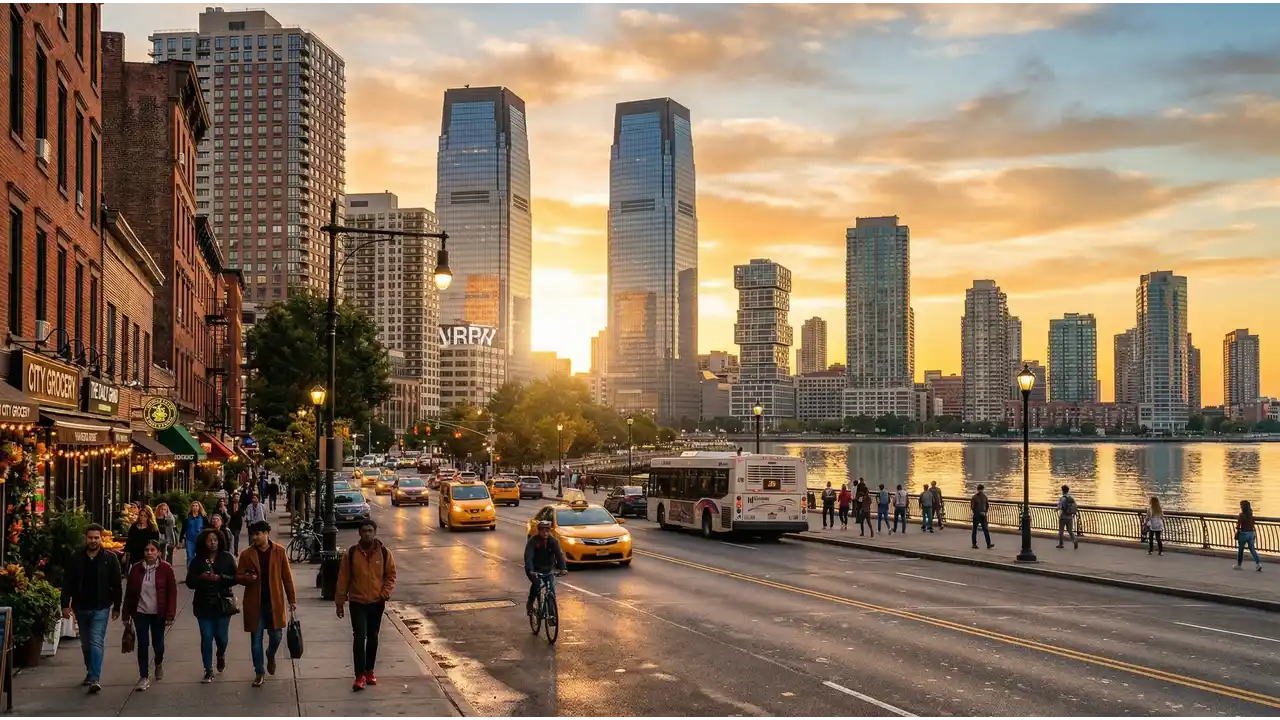
Newark is New Jersey's largest city, located directly across from Manhattan. The population is predominantly African American and Latino, with growing numbers of young professionals drawn by proximity to New York and lower costs than the city itself. Daily life centers on neighborhoods like the North Ward, Downtown, and the Ironbound, which has Portuguese and Spanish communities. The city has a humid continental climate with cold winters and warm summers. Public transit connects heavily to NYC via NJ Transit bus and rail. Most residents are working-class to middle-class, with an increasing young professional presence. Street life is active but dense; it's an urban environment without Manhattan's tourist overlay.
💡 Local Insights
Newark · 2026
Newark's affordability relative to New York City is its main draw, though it remains expensive by national standards. Housing costs run around $2,102/month on average, with significant variation by neighborhood. Downtown and University Heights tend toward $1,800 to $2,400 for a one-bedroom apartment, while the Ironbound and North Ward can range $1,600 to $2,200. Expats often find that perception lags reality; the city is safer in commercial and residential zones than its reputation suggests, though vigilance is normal urban practice. Grocery costs average $540/month for a moderate diet, roughly in line with the Northeast regional average. NJ Transit bus passes are $70 monthly for unlimited rides; most residents without cars budget for this. Food inflation has tracked national trends. The key cost lever for individuals is proximity to New York jobs; remote workers find Newark significantly cheaper than living in Manhattan while maintaining the commute option. Real estate speculation in development zones (near the waterfront and downtown) is pushing some rents upward.
Frequently Asked Questions
How much does it cost to live in Newark per month?
A moderate lifestyle in Newark costs around $3,775/month. This breaks down roughly as: housing $2,102/month, groceries $540/month, utilities and transport around $600/month, and discretionary spending (dining, entertainment, personal services) the remainder. A budget tier lifestyle runs approximately $2,265/month by cutting discretionary spending and choosing less expensive housing, while a comfortable lifestyle with more space and flexibility reaches around $5,851/month. The variation depends heavily on neighborhood choice and whether you rely on a car.
What is the average rent in Newark?
Average rent is approximately $2,102/month for a one-bedroom apartment in a moderate-cost neighborhood. Studio apartments typically run $1,600 to $1,900/month, while one-bedroom units range from $1,800 to $2,400/month depending on location. The Ironbound and North Ward neighborhoods offer lower ranges ($1,600 to $2,000), while Downtown and University Heights average $1,900 to $2,300. Two-bedroom apartments typically cost $2,400 to $3,200/month. Prices have risen with development investment and proximity to Manhattan, particularly in waterfront zones. Most leases require first month, last month, and security deposit upfront.
Is Newark cheap to live in for expats?
Newark is inexpensive compared to Manhattan or other major Northeast metros, but not globally cheap. For expats from Western Europe or Australia, it's moderate to affordable. For expats from South Asia or Latin America, it's expensive. The real advantage is access to New York City employment and services at a fraction of NYC rents. Expats should budget carefully for transport if commuting to Manhattan ($70/month for unlimited NJ Transit, or higher for parking and gas if driving). Healthcare and utilities are straightforward to access. The main adjustment is accepting a denser urban environment and routine street-level vigilance.
How much does food cost per month in Newark?
Groceries average $540/month for one person eating a moderate diet. A typical weekly shop at supermarkets like Shop-Rite or Acme runs $100 to $130, including staples like milk ($3.50 to $4/gallon), eggs ($2.50 to $3/dozen), chicken breast ($8 to $10/pound), and fresh produce ($1 to $4 per item depending on season). The Ironbound has ethnic markets offering cheaper produce and specialty items. Eating out ranges from $12 to $18 for casual meals (diner, pizza, sandwich) to $40 to $70 for moderate dining. Newark does not have the restaurant diversity of Manhattan, but options in the Ironbound (Portuguese, Spanish) and Downtown are expanding.
What salary do you need to live comfortably in Newark?
A comfortable lifestyle costs roughly $5,851/month, which suggests a gross income of approximately $70,000 to $75,000 annually (accounting for taxes and assuming a 1/3 housing cost ratio). This budget allows for a one-bedroom or two-bedroom apartment in a good neighborhood, regular dining out, car ownership (if desired), and discretionary spending on entertainment and travel. For households with dependents, add 30 to 50 percent. Remote workers earning US salaries find this comfortable. Local median household income is lower, meaning many residents live on the budget tier of $2,265/month or operate with multiple earners per household.
How does the cost of living in Newark compare to other places?
Newark sits in the middle of the cost-of-living spectrum for major US cities. A moderate lifestyle costs $3,775 per month, with housing running $2,102 monthly. That puts it slightly above Chicago, where the same lifestyle runs $3,550 with housing at $1,955. Both cities offer comparable affordability for the Northeast and Midwest.
Move down to St. Louis and you'll find noticeably lower costs overall at $2,750 monthly, with housing at $1,253. On the other end, San Francisco is substantially pricier at $5,200 monthly, with housing alone reaching $3,302. Newark offers reasonable access to urban amenities and regional connectivity without the premium pricing of the coasts, making it competitive for people balancing city living against budget constraints.
Yes, the budget tier is $2,265/month, though it requires careful choices. Budget for housing around $1,200 to $1,400/month (studio or shared housing in affordable neighborhoods like North Ward or parts of the Ironbound), groceries $400 to $450/month (cooking most meals, ethnic markets), and transport $70/month (NJ Transit without a car). Utilities run $80 to $120/month. This leaves roughly $300 to $400 for phone, internet, personal care, and minimal discretionary spending. It's workable for a single person without dependents, particularly if employed locally and without a car. Healthcare emergencies or unexpected costs require emergency savings.