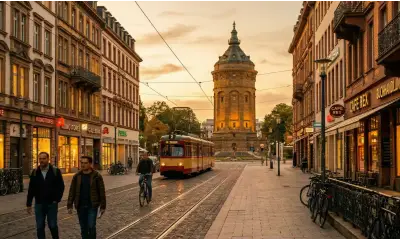
Munich is Germany's third-largest city and the capital of Bavaria, shaped by its role as a tech and automotive hub. The city sits south of Germany's industrial heartland, with a mix of finance professionals, engineers, students, and long-term expat communities. Daily life centers on public transport (U-Bahn and S-Bahn trains), beer halls and cafes, and proximity to Alpine hiking. Winters are cold and grey; summers are mild. The pace is organized and direct, less frenetic than Berlin or Frankfurt. Food culture blends traditional Bavarian (pork, beer, bread) with cosmopolitan options reflecting growing immigration.
💡 Local Insights
Munich · 2026
Munich's cost structure reflects demand from high-wage employers (BMW, Siemens, software firms) and limited housing supply. Rent is the biggest driver, averaging $1,302/month and climbing. A one-bedroom apartment in central districts (Schwabing, Au-Haidhausen) runs $950-$1,300; outer rings (Neuperlach, Pasing) drop to $800-$1,100. Grocery costs around $411/month for basics, slightly above German national average due to local market premiums. Weekly farmers markets (Viktualienmarkt, Elisabethmarkt) offer cheaper produce than supermarkets. Public transport (U6 day pass around $7) is reliable and frequent. Expats often pay 5-10 percent premiums for furnished rentals or through relocation services. Eating out ranges $12-$18 for lunch specials to $35-$60 for dinner. Salaries in tech and engineering offset housing costs, but service-sector jobs do not.
Frequently Asked Questions
How much does it cost to live in Munich per month?
A moderate lifestyle in Munich costs $2,575/month. This breaks down as follows: housing (rent, utilities, household items) runs $1,302/month, groceries around $411/month, transport $60-$80/month via public transit pass, and the remainder covers dining out, entertainment, insurance, and personal goods. Budget-conscious residents can live on $1,545/month by sharing apartments, cooking at home, and using transit. Those seeking comfort spend $3,991/month or more to live alone in desirable neighborhoods and eat regularly at restaurants.
What is the average rent in Munich?
Average rent in Munich is $1,302/month for a moderate lifestyle. A one-bedroom apartment in central neighborhoods like Schwabing or Au-Haidhausen runs $950-$1,300/month; two-bedroom apartments cost $1,400-$1,800/month. Outer ring areas (Neuperlach, Sendling, Pasing) offer one-bedrooms for $750-$1,000/month. Furnished short-term rentals typically cost 10-15 percent more. Prices have risen 4-6 percent annually over the past several years. Student housing and shared flats run cheaper: a room in a Wohngemeinschaft (shared flat) averages $600-$850/month. Always budget for Nebenkosten (utilities and fees), which add $150-$200/month to base rent.
Is Munich cheap to live in for expats?
No. Munich ranks among Germany's most expensive cities, comparable to Stuttgart and Hamburg. For expats coming from North America or Western Europe, housing costs are moderate to high. Compared to London, Paris, or Zurich, Munich is slightly cheaper overall but rents are similar. Tech sector expats often find salaries offset costs. However, service workers, students, and those on fixed incomes find Munich tight. Furnished apartments marketed to expats run 10-15 percent premiums. Language barriers can also drive costs up (higher agent fees, relocation services). EU citizens have employment and housing advantages over non-EU expats, who face visa and rental deposit requirements.
How much does food cost per month in Munich?
Groceries average $411/month for a single person. Weekly shopping at Aldi or Lidl (bread $1-$2, milk $1, cheese $3-$4, chicken $7-$9/kg, produce $2-$4 per item) keeps costs low. Farmers markets like Viktualienmarkt and Elisabethmarkt offer fresh vegetables and regional specialties, sometimes cheaper than supermarkets. Eating out costs more: lunch specials run $10-$15, casual dinners $18-$30 per person, and reservations at restaurants $35-$60. Bavarian staples (pork, bread, beer) are inexpensive; imported foods and organic products cost significantly more. Shared cooking in flat-shares reduces per-person food costs further.
What salary do you need to live comfortably in Munich?
A comfortable lifestyle costs $3,991/month, suggesting a gross monthly income of $5,500-$6,500 (accounting for German taxes and social insurance at roughly 40 percent). For a couple, combined gross income of $8,000-$10,000/month allows independent housing, regular dining out, and modest travel. Tech professionals, engineers, and senior finance roles (€55,000-€75,000 annual) hit this threshold easily. Service-sector workers (hospitality, retail) earning €24,000-€30,000 annually find comfort tight. Students and interns living on €450-€700/month survive through shared housing, cooking, and minimal entertainment. Munich's high minimum wage (€12.41 as of current standards) still leaves full-time minimum-wage earners near the budget threshold.
How does the cost of living in Munich compare to other places?
Munich sits at the middle-upper end of major European cities. A moderate lifestyle costs $2,575 per month, with housing at $1,302 per month. This makes Munich slightly more expensive than Madrid, where a moderate lifestyle runs $2,450 monthly. Turin is considerably cheaper at $1,775 for the same lifestyle, roughly 30 percent less than Munich overall. Amsterdam, by contrast, costs significantly more at $3,150 monthly. Within Munich itself, housing dominates your budget at about half your monthly expenses. If you're coming from a smaller German city or rural area, expect a substantial jump. If you're relocating from London or Switzerland, Munich will feel like relief. Your money stretches furthest in Turin, moderately in Munich and Madrid, and tightest in Amsterdam.
Yes, but with discipline. Budget breakdown: $850-$950/month for a room in a shared flat (Wohngemeinschaft), $350/month groceries (cooking most meals), $50/month transport (public transit pass), $100 for insurance and phone, leaving $100-$245 for dining out, entertainment, and emergencies. This requires avoiding furnished rentals, not eating restaurant meals often, and using free activities (parks, museums on free days, hiking nearby). Students benefit from subsidized cafeterias (€3-€4 meals) and dorms. Long-term sustainability is tight; most people at this budget live temporarily or rely on support. A second income stream or roommate contributions ease pressure significantly.