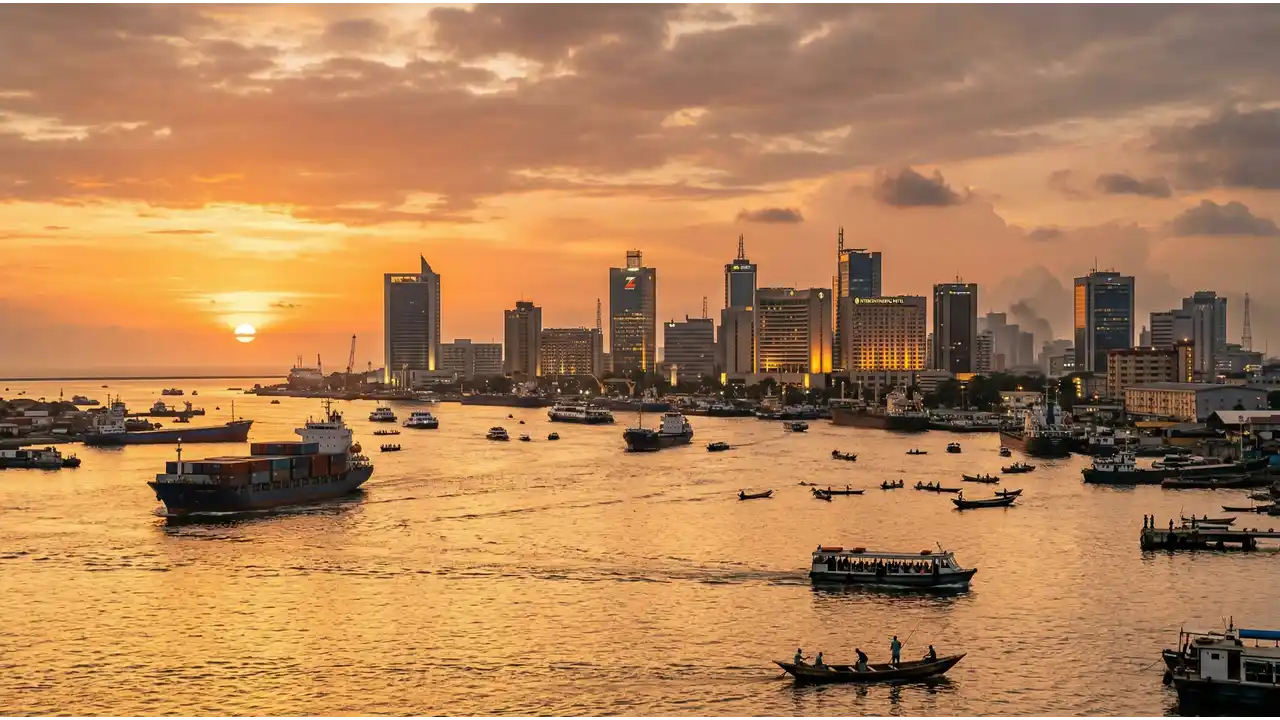
Lagos is Nigeria's largest city and economic hub, with around 15 million people spread across six mainland and island areas. The climate is tropical, hot and humid year-round, with a rainy season from May to October. Daily life centers on work, traffic, and social networks; most residents spend significant time commuting. The city mixes formal office districts (Victoria Island, Ikoyi) with sprawling residential neighborhoods (Lekki, Surulere, Yaba) and informal settlements. Power outages remain common. English is the official language, and most expats find community among the international business population. Healthcare, food, and entertainment quality varies dramatically by neighborhood and spending level.
💡 Local Insights
Lagos · 2026
Lagos costs reflect Nigeria's status as a high-income-country enclave within a lower-income economy. Housing at $779/month reflects this split sharply. Expat-focused areas like Victoria Island and Ikoyi command $1,200 to $1,600/month for a modest one-bedroom apartment; residential neighborhoods like Lekki, Yaba, or Surulere run $500 to $800/month. Local Nigerian salaries are far lower, so expat salaries anchor prices upward. Groceries at $168/month assumes local markets and staple foods (rice, beans, plantains, tomatoes, eggs). Imported goods (cheese, breakfast cereals, wine) cost 2 to 4 times supermarket prices in the US. Street food is cheaper and widely eaten; a meal costs $2 to $5. Transport is cheap: commercial buses cost $0.30 to $0.50 per ride; ride-hailing apps (Uber, Bolt) run $1 to $4 for most trips. Medical care at private clinics used by expats is international-standard pricing. Internet and phone plans are inexpensive. The real cost trap is housing quality and expat expectation; safe, reliable housing near work drives spending up quickly.
Frequently Asked Questions
How much does it cost to live in Lagos per month?
A moderate lifestyle costs $1,300/month. This covers $779/month for housing (typically a one-bedroom apartment in a safe neighborhood), $168/month for groceries, around $40/month for transport, $50/month for utilities (where available), $100/month for phone and internet, and $163/month for dining out, personal care, and entertainment. Budget-conscious residents manage on $780/month by sharing housing, cooking all meals, and using public transport. Expats prioritizing comfort and quality spend $2,015/month or more, which adds security, better housing, and frequent dining out.
What is the average rent in Lagos?
Rent averages $779/month for a moderate one-bedroom apartment in accessible neighborhoods. In expat-focused areas like Victoria Island, Ikoyi, or the high-end parts of Lekki, expect $1,200 to $1,600/month for equivalent space. More affordable residential zones like Yaba, Surulere, or outer Lekki rent for $500 to $800/month. Studio apartments or shared housing drop to $300 to $500/month. Furnished apartments cost 20 to 40 percent more. Most landlords require 12 months' rent upfront or substantial deposits; agency fees add 5 to 10 percent. Utilities (generator fuel, water, internet) are typically separate and variable.
Is Lagos cheap to live in for expats?
Lagos is cheap if you earn in hard currency and live like locals do, but expensive if you expect the comfort standards of your home country. Housing for expats typically costs more because demand concentrates in secure neighborhoods with reliable power and water. Local salaries are low, so even modest expat spending feels high. Groceries, transport, and dining are genuinely inexpensive. Healthcare at private clinics meets international standards but costs international prices. Many expats report their $1,300 to $2,015/month budget is tight compared to what that money buys in Southeast Asia or Latin America. The real expense is safety and quality-of-life infrastructure, not raw food or transport costs.
How much does food cost per month in Lagos?
Groceries cost $168/month if you shop at local markets and cook: rice, beans, plantains, tomatoes, eggs, and chicken are staples. Imported goods (cheese, yogurt, breakfast cereals, wine) cost 2 to 4 times US supermarket prices. Street food is very cheap: a filling meal (jollof rice, stew, protein) costs $2 to $5. Casual restaurants and food courts charge $5 to $15 per meal. Fine dining in Victoria Island runs $20 to $60+ per person. Most expats spend $200 to $300/month on groceries and $150 to $250 eating out, depending on frequency and venues. Local markets (Lekki, Yaba, Surulere) are significantly cheaper than supermarkets in expat areas.
What salary do you need to live comfortably in Lagos?
A comfortable lifestyle costs $2,015/month. This typically means a private one-bedroom apartment in a secure neighborhood, reliable power and water, internet that works, frequent dining out, occasional travel within Nigeria, and household help (cleaner, driver, or both). A single person earning $2,500 to $3,500/month (in USD) can live comfortably without financial stress. Families of four need $4,000 to $6,000/month depending on school choice (private school tuition adds $8,000 to $25,000/year). Expat salaries in finance, oil and gas, consulting, and tech typically fall in this range. Local professionals earning in naira require significantly higher monthly earnings to reach the same comfort level.
How does the cost of living in Lagos compare to other places?
Lagos is more expensive than most African cities you might compare it to, though the gap varies. A moderate lifestyle in Lagos costs $1,300 per month, with housing at $779 monthly. That positions it above Kampala, where the same lifestyle runs $900 per month, and slightly above Douala at $1,225 per month. The real difference emerges when you look at Abidjan, which is notably pricier at $1,675 per month, with housing alone at $910. So Lagos sits in the middle-to-upper range for major West and Central African cities. Your money stretches further in Kampala but tighter in Abidjan. Within Lagos itself, costs vary sharply by neighborhood. Lekki and Victoria Island command premium prices, while areas like Surulere or Bariga are considerably cheaper. Your actual monthly spend depends heavily on which part of the city you choose.
Yes, if you accept significant trade-offs. The budget tier of $780/month covers shared housing ($300 to $400/month), groceries ($168/month), basic transport ($20/month on buses), minimal utilities and phone ($40/month), and very little for dining out, entertainment, or contingencies. You must cook nearly all meals, use public transport exclusively, live far from major job centers or expat neighborhoods, and have no buffer for medical emergencies or travel. Most people at this budget are students, local workers, or expats with extremely tight circumstances. Power outages mean generator fuel or battery costs. Medical care at public hospitals is cheap but unreliable. This budget is feasible but leaves no margin for error or comfort.