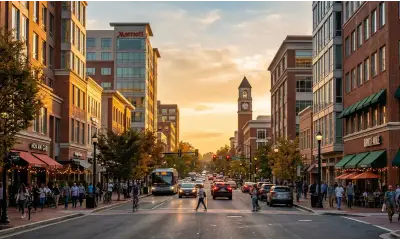
Washington DC is a federal city with a dense urban core and established neighborhoods spreading into Maryland and Virginia. The population includes government workers, nonprofit staff, diplomats, and young professionals. Daily life revolves around Metro transit, dense commercial corridors, and the Potomac waterfront. Winters are cold and wet; summers are hot and humid. The city has distinct neighborhoods with different characters: Capitol Hill and Logan Circle draw younger crowds, Georgetown and Woodley Park are older and pricier, U Street and H Street have galleries and restaurants. Most residents use the Metro or drive, though biking is viable in central areas.
💡 Local Insights
Washington DC · 2026
DC's cost of living sits at $3,975/month for a moderate lifestyle, driven primarily by housing. Rent for a one-bedroom apartment in central neighborhoods (Dupont Circle, U Street, Capitol Hill) typically runs $1,800 to $2,300/month, while outer areas like Petworth or Columbia Heights average $1,500 to $1,900. Single-family homes and larger apartments push higher. Housing across the city averages $2,250/month. Groceries run about $556/month for one person, consistent with other major cities; eating out is expensive at restaurants (dinner entree $18-28). Metro passes cost $70 monthly for unlimited rides. Transportation, childcare, and healthcare (insurance copays are steep) drive budgets up. No expat premium exists, but visa status affects job availability and income. Neighborhoods matter enormously: living in or near the federal core costs more than outer areas, though commute times and access to Metro affect real expenses.
Frequently Asked Questions
How much does it cost to live in Washington DC per month?
A moderate lifestyle costs $3,975/month, including housing ($2,250), food ($556), utilities and internet ($150-180), transport ($70-120 for Metro), dining out and entertainment ($400-600), and miscellaneous expenses. The budget tier is $2,385/month for basics only (cheaper housing, minimal dining out, no car). A comfortable lifestyle runs $6,161/month, adding buffer for frequent eating out, entertainment, fitness, and savings. Your actual cost depends on neighborhood choice and whether you have a car.
What is the average rent in Washington DC?
Average rent is $2,250/month across the city. One-bedroom apartments in central neighborhoods (Dupont Circle, Logan Circle, U Street) range from $1,900 to $2,400. Capitol Hill and nearby run $1,800 to $2,200. Outer neighborhoods like Petworth, Trinidad, or Brightwood average $1,500 to $1,900. Two-bedroom apartments average $2,800 to $3,400 citywide. Arlington and Alexandria across the river trend slightly cheaper ($1,700-$2,100 for one-bedrooms) but add commute time. Prices have risen, but availability fluctuates seasonally; fall and winter see more listings.
Is Washington DC cheap to live in for expats?
No. DC ranks among the more expensive US cities, comparable to Boston or Seattle, and significantly more costly than most expat hubs outside the US (Bangkok, Lisbon, Mexico City). A comfortable lifestyle at $6,161/month exceeds typical expat expectations. However, DC offers advantages: strong job market for English speakers, reliable infrastructure, established international communities, and excellent public transit. Expat salaries often offset costs. No visa-tied pricing exists as in some countries, though work authorization affects employment options and income. Many expats find DC workable if they have professional incomes.
How much does food cost per month in Washington DC?
Groceries average $556/month for one person, covering basics like bread ($3-4 per loaf), milk ($4-5 per gallon), chicken ($8-10 per pound), and fresh vegetables ($1.50-3 per item depending on season). Eating out is expensive: casual lunch is $14-18, dinner entree at mid-range restaurants $18-28, coffee $3.50-5. The farmer's markets in multiple neighborhoods offer competitive produce prices but require planning. Whole Foods and Trader Joe's exist but skew pricier. Budget grocers like Aldi and Food Depot are available but scattered. Most residents spend more on restaurants than grocery stores.
What salary do you need to live comfortably in Washington DC?
A comfortable lifestyle costs $6,161/month, suggesting an annual income of $74,000 before taxes for a single person, or roughly $110,000 gross to account for income and payroll taxes. Couples can share housing costs, reducing per-person need. The moderate budget of $3,975/month requires around $48,000 annually before taxes ($73,000 gross). Most professionals in government, nonprofits, tech, and finance earn above these thresholds. However, entry-level salaries often fall short of comfortable levels, requiring roommates or living in cheaper outer neighborhoods. Benefits (healthcare, transit) matter significantly to net costs.
How does the cost of living in Washington DC compare to other places?
Washington, D.C. sits in the middle-to-upper range of major U.S. cities. A moderate lifestyle costs $3,975 per month, with housing running $2,250 per month. That puts it above St. Louis, where moderate living costs $2,750 monthly and housing is $1,253 monthly. D.C. is roughly comparable to Los Angeles, which runs $4,350 for the same lifestyle and $2,446 for housing. San Francisco is notably dearer at $5,200 for moderate spending and $3,302 for housing alone. If you're relocating from elsewhere on the coasts, D.C. will feel familiar in price. Coming from the Midwest or smaller metros, expect a significant jump. The cost reflects D.C.'s role as the national capital, with heavy demand for housing and professional services offsetting some advantages you'd find in cheaper regions.
Yes, but with strict trade-offs. This is the budget tier, achievable by renting a room in a shared house in outer neighborhoods (Petworth, Columbia Heights, Brightwood) for $900-1,100, spending $300/month on groceries and minimal dining out, using Metro for transport, and avoiding cars, entertainment, and nightlife. You'll have little buffer for emergencies, dating, travel, or hobbies. Many people do this, especially early career workers and graduate students. It requires discipline, roommates, and willingness to live outside central neighborhoods. Healthcare costs, unexpected repairs, or social pressure create stress. Doable short-term; unsustainable long-term for most.