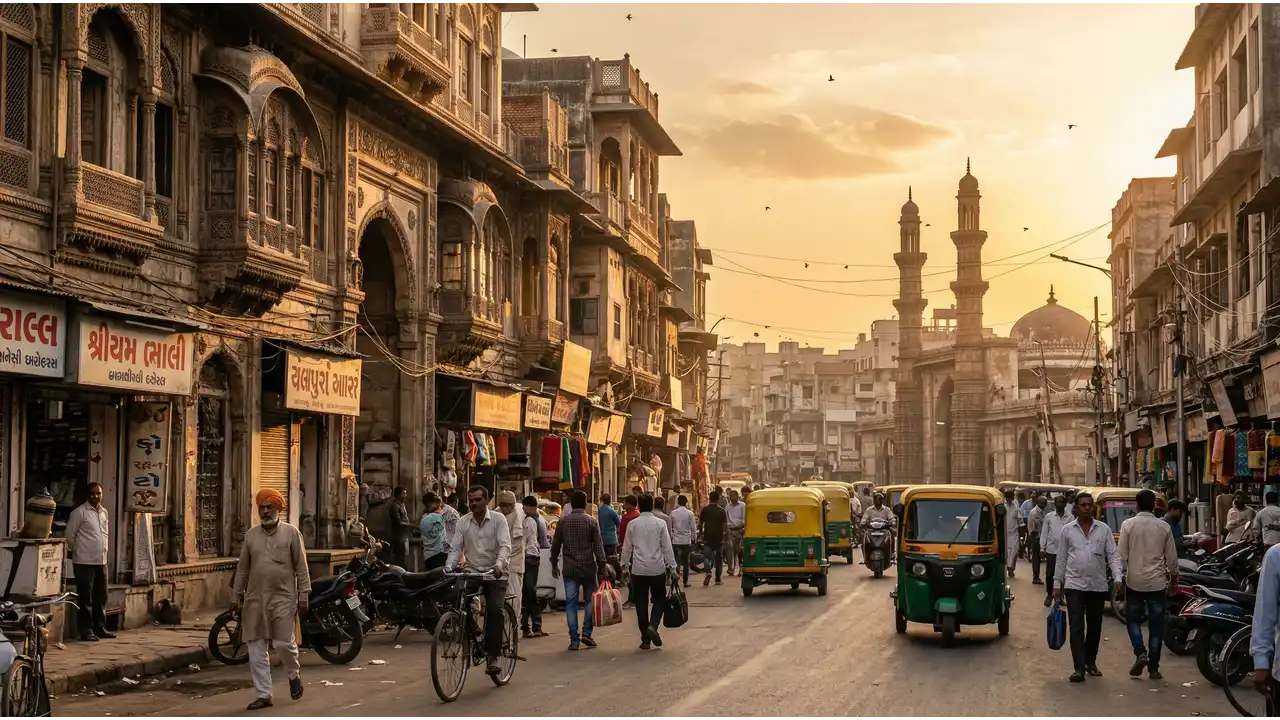
Jaipur is Rajasthan's capital and a major hub for IT, tourism, and manufacturing. The city has a grid layout designed in the 18th century, with the old walled city at its center and modern residential areas spreading outward. Summers are intensely hot (April to June regularly exceed 40°C/104°F). The monsoon season (July to September) brings relief and occasional flooding in low-lying areas. Most residents are Hindi speakers, though English is common in business and among younger people. Daily life centers on local markets, temple visits, and evening gatherings in parks. Traffic is heavy, pollution moderate to high during winter months. The expat community is small but growing, concentrated in neighborhoods like C-scheme and near the tech parks.
💡 Local Insights
Jaipur · 2026
Jaipur's cost of living reflects its position as a secondary Indian city with strong local commerce but limited luxury infrastructure. Housing at $156/month covers shared accommodation or a modest private room in central areas like C-scheme or the Pink City periphery. Actual rents range from $80 to $200 depending on neighborhood, amenities, and whether you're renting from locals (cheaper) or expat landlords (higher). Furnished expat-focused flats run higher, sometimes $250 to $350/month. Groceries at $103/month assumes cooking at home with local produce from vegetable markets and staple grains; eating restaurant meals daily would triple food costs. Auto-rickshaws dominate transport at 3 to 5 rupees per kilometer (roughly $0.04 to $0.06). Local pricing applies if you speak Hindi or have Indian contacts; expat-targeted shops and restaurants charge 30 to 50 percent premiums. Water quality requires filtration; buying bottled water or maintaining a purifier adds $10 to $15/month. Electricity in summer can spike due to heavy air conditioning use. The comfortable budget of $736/month allows for a private apartment, regular dining out, domestic help a few times weekly, and occasional travel.
Frequently Asked Questions
How much does it cost to live in Jaipur per month?
A moderate lifestyle costs $475/month. This covers housing ($156/month), groceries ($103/month), utilities, transport, and modest entertainment. The budget tier is $285/month (single room, minimal eating out, basic transport). A comfortable lifestyle costs $736/month, which allows for a private apartment, regular restaurant meals, domestic help, and weekend trips. Actual costs vary widely based on neighborhood choice, eating habits, and whether you hire household staff. Expats typically spend 20 to 30 percent more than local Indians due to premium accommodation and imported food preferences.
What is the average rent in Jaipur?
Average housing costs $156/month. A private room in shared housing or a small studio in outer areas runs $80 to $150/month. A one-bedroom apartment in middle-class neighborhoods like C-scheme, Malviya Nagar, or Mansarovar ranges from $120 to $220/month. Furnished units targeting expats cost $200 to $350/month and are concentrated near tech parks and C-scheme. Older properties in the walled Pink City are cheaper but often lack modern amenities. Landlords in local areas typically negotiate month-to-month or annual leases directly; formal rental agencies add 10 to 15 percent premiums. Security deposits typically equal one to three months' rent.
Is Jaipur cheap to live in for expats?
Yes, but with caveats. Compared to major Indian metros like Bangalore or Mumbai, Jaipur is notably cheaper. A moderate expat lifestyle ($475/month) is feasible, though most expats report spending $600 to $900/month due to preferences for furnished apartments, dining out more frequently, and avoiding street-level markets. The main cost drivers are housing (if you want Western-standard amenities like consistent hot water and parking) and food (if you buy imported or restaurant meals regularly). Utilities and transport remain very cheap. The city lacks the expat infrastructure of larger metros, so you'll likely pay more for convenience items and less for authentic local experiences.
How much does food cost per month in Jaipur?
Groceries cost $103/month for a moderate diet. This assumes buying staples at local vegetable markets and wholesale shops: dal and lentils ($1 to $2/kg), rice ($0.60 to $0.80/kg), vegetables ($0.30 to $0.60/kg), milk ($0.50/liter), and bread ($0.20 per loaf). Eggs and chicken are cheap ($1.50 to $3/kg). Imported items (cheese, cereals, specialty oils) cost 2 to 3 times local prices. Eating out at local thalis ranges from $1.50 to $3 per meal. Casual restaurants frequented by expats run $4 to $8. Coffee at chains costs $2 to $3. A mid-range restaurant dinner is $8 to $15 per person.
What salary do you need to live comfortably in Jaipur?
A comfortable lifestyle costs $736/month, equivalent to roughly $8,800/year. This supports a one-bedroom apartment ($150 to $200/month), eating out several times weekly, occasional travel within Rajasthan, and domestic help (a cleaner or cook 2 to 3 times weekly adds $30 to $50/month). Remote workers and retirees with this income live well above average local standards. To live very comfortably (private accommodation with amenities, frequent air travel, international school children), budget $1,200 to $1,500/month. Local professionals and IT workers typically earn $400 to $800/month, so expats at $736/month are in the upper-middle income bracket by local standards.
How does the cost of living in Jaipur compare to other places?
Jaipur is genuinely affordable compared to most Indian metros. A moderate lifestyle runs $475 per month, with housing at $156 per month, which gives you considerably more purchasing power than you'd find in Pune, where a moderate lifestyle costs $650 per month and housing alone runs $271 per month.
Regionally, Jaipur sits in the middle tier. Kabul is cheaper at $400 per month overall, though housing there costs $91 per month. Karachi is roughly equivalent at $500 per month with housing at $135 per month. What makes Jaipur practical is that your money stretches across daily expenses, food, and transportation while keeping housing costs low. You're paying substantially less than you would in larger Indian cities, yet the city has real infrastructure, restaurants, and services. It's a solid choice if you want South Asian affordability without sacrificing urban conveniences.
Yes, but with real constraints. The budget tier of $285/month requires a shared room ($60 to $90/month), cooking at home primarily ($65/month on dal, rice, and vegetables), minimal dining out, and using auto-rickshaws for daily transport. You'd forgo restaurant meals, alcohol, gym memberships, and travel. Utilities and phone bills would stay minimal. This budget is realistic for Indian locals and possible for disciplined expats, but most Westerners find it psychologically difficult. You'd lack a private space and social buffer. Many expats report that landing on this budget requires negotiating directly with local landlords in Hindi and shopping only at wholesale vegetable markets. It's survivable but not recommended for sustained living; most expats adjust upward to $400 to $500/month within weeks of arrival.